
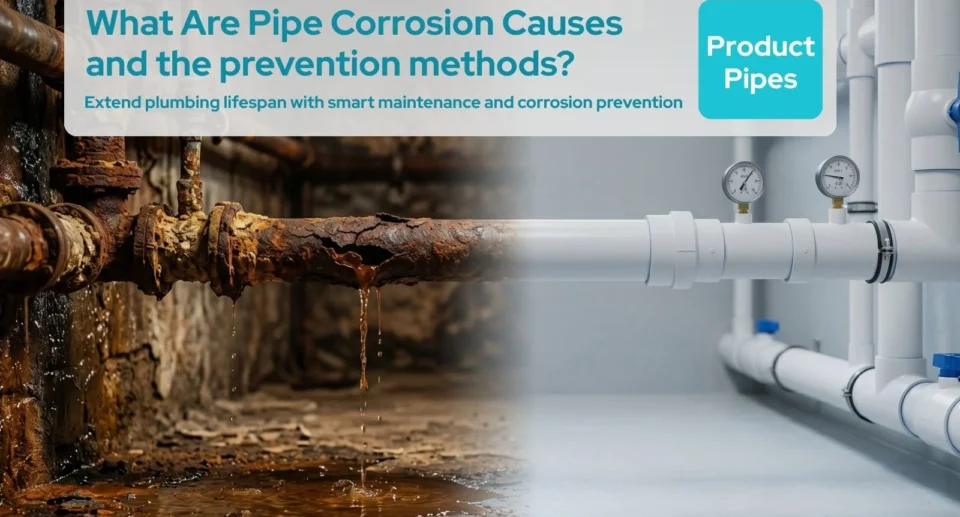
Fresh, clean water comes to homes, offices, and industries through pipes every day. Over time, these pipes get damaged. The main reason is corrosion. Corrosion damages the plumbing system, which reduces efficiency. Ignoring these can lead to expensive repairs. So, the reader who is having all these plumbing pipe issues must know Pipe Corrosion Causes and Prevention.
When you understand the reasons behind corrosion and the steps to stop it, you can protect both water quality and infrastructure.
Key Takeaways
- Corrosion is the main factor that distorts the pipes through chemical and electrochemical reactions.
- Water chemistry, temperature, and metal when they come into contact may often trigger corrosion.
- Rust-colored water and leaks can indicate pipe corrosion.
- The impacts of corrosion in plumbing pipes can cause contamination and structural damage.
- Regular maintenance and protective materials help to stop corrosion risks.
- The Understanding pipe corrosion guide helps extend the life of the plumbing system and reduce repair costs.
What Is Pipe Corrosion?
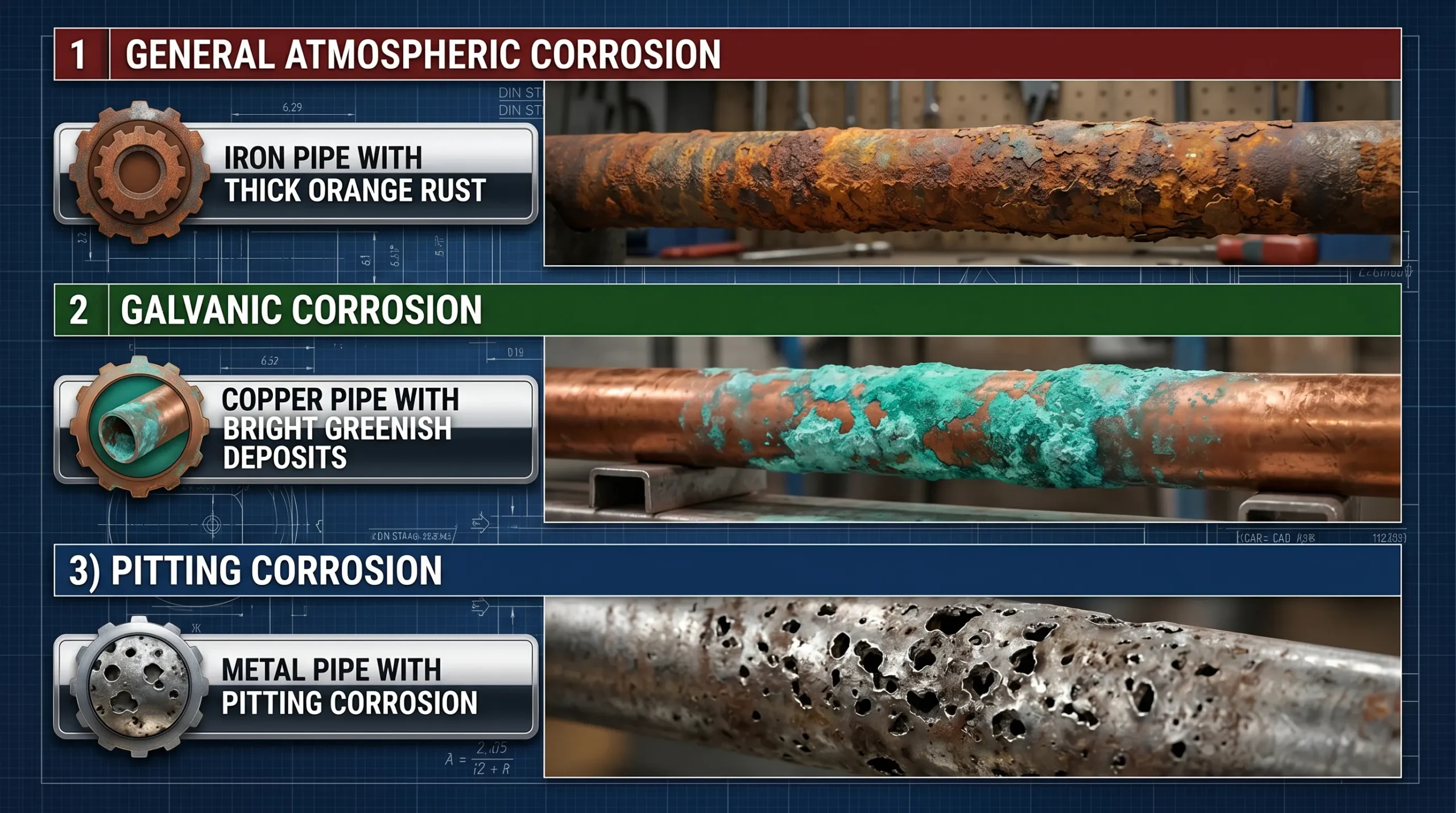
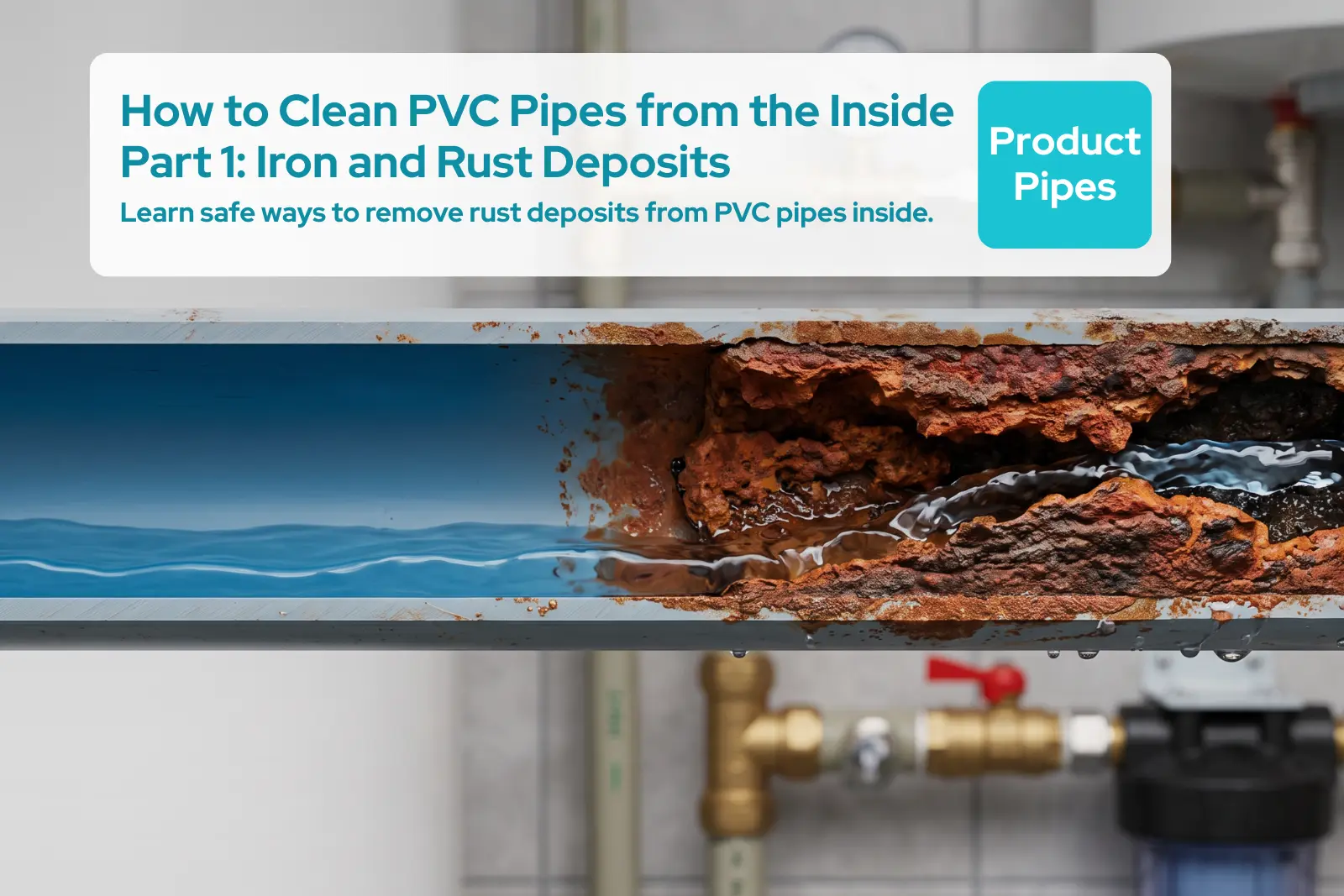
Pipe corrosion happens when metal pipes are exposed to environmental elements such as oxygen, minerals, or chemicals present in water.
With the passing of time, these reactions make the metal surface filled with rust particles.
This process can be observed in different forms, such as :
- Rust in iron pipes
- Greenish deposits on copper pipes
- Pitting corrosion that creates small holes
The concept of Pipe Corrosion Causes and Prevention has become very important because different metals react differently to water conditions.
For example:-
- Iron and steel pipes create more rust than plastic pipes
- Copper pipes develop oxidation layers
When left untreated, corrosion weakens pipes and shortens their lifespan.
Why Do Pipes Corrode Over Time?
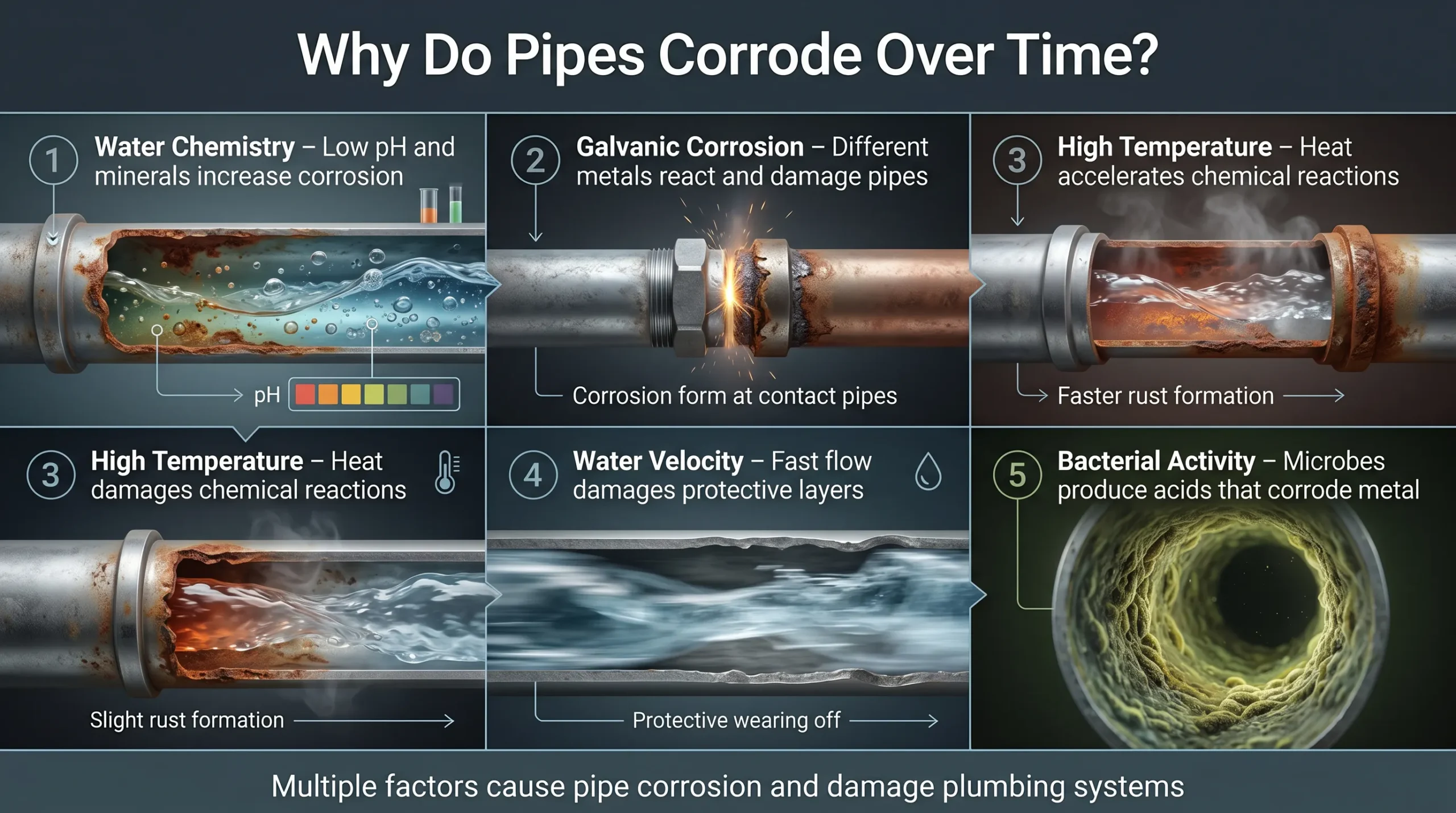
Many factors contribute to corrosion in plumbing systems. So let’s here explore what causes corrosion in pipes to check out the right solutions:
1. Water Chemistry
Water with high acidity or low pH levels leads to increased corrosion. Minerals and dissolved oxygen also help with chemical reactions inside pipes.
2. Galvanic Corrosion
When two different metals come into contact with a plumbing system. The metals react with each other and generate an electrochemical reaction that damages pipes.
3. High Water Temperature
Hot water pushes more for chemical reactions. As a result, corrosion occurs faster in systems that carry heated water.
4. Water Velocity
The friction is increased due to fast-moving water inside pipes. This can damage the protective layers and expose metal surfaces.
5. Bacterial Activity
Certain bacteria are produced due to acids that attack metal surfaces. This process is called microbial-induced corrosion.
So these are common reasons for corrosion that damage the water pipe.
What Are the Signs of Pipe Corrosion?
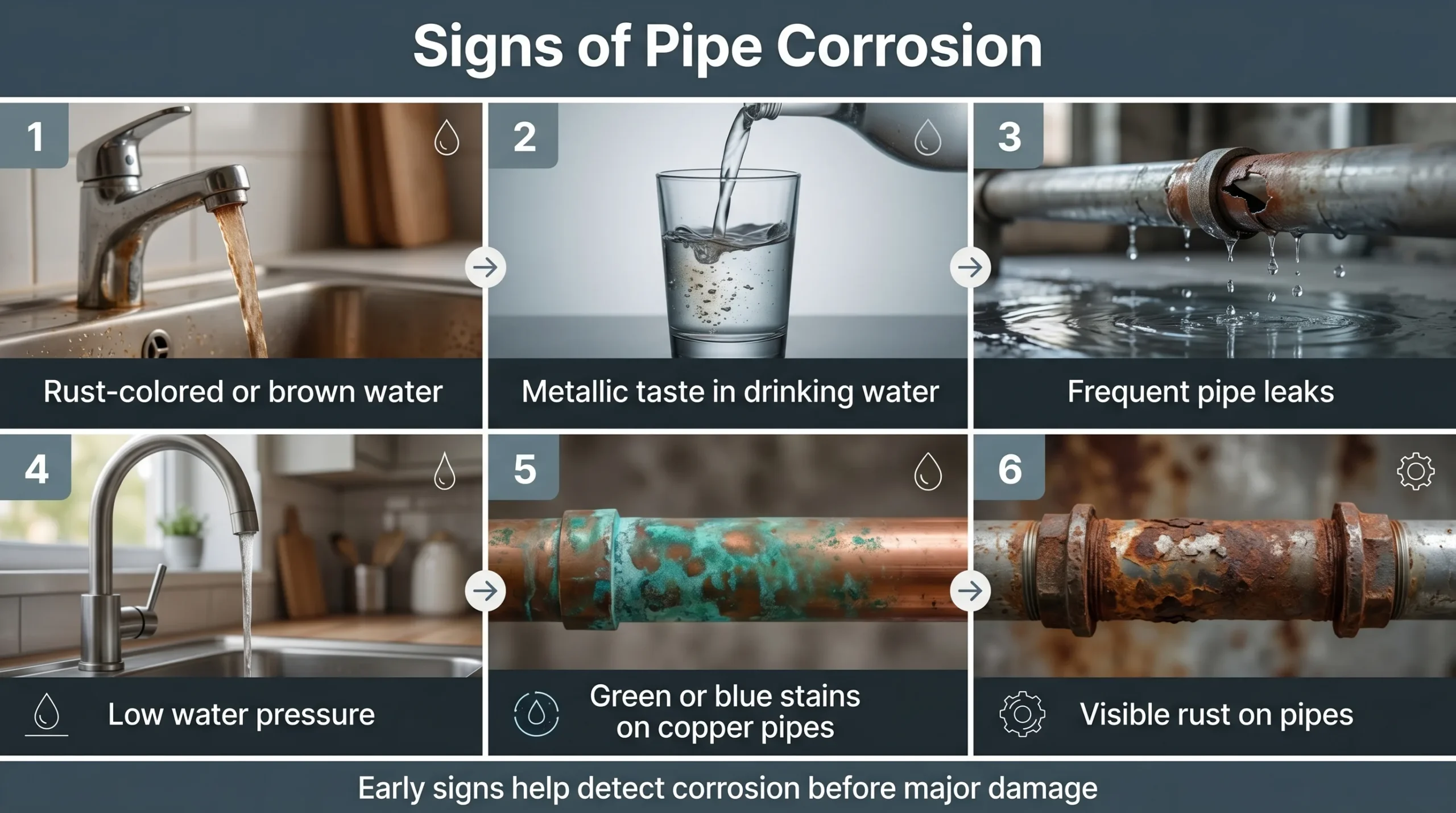
Corrosion takes time to happen, but it does not occur overnight. Pipes often show few signs before the serious damage.
Watch for these common indicators:
- Rust-colored or brown water
- Drinking water taste becomes metallic
- Regular pipe leaks
- Low water pressure
- Green or blue stains on copper pipes
- Visible rust on exposed metal pipes
Early detection of pipe corrosion causes and Prevention can help the homeowner to reduce the risk.
What Problems Does Corrosion Cause in Plumbing Pipes?
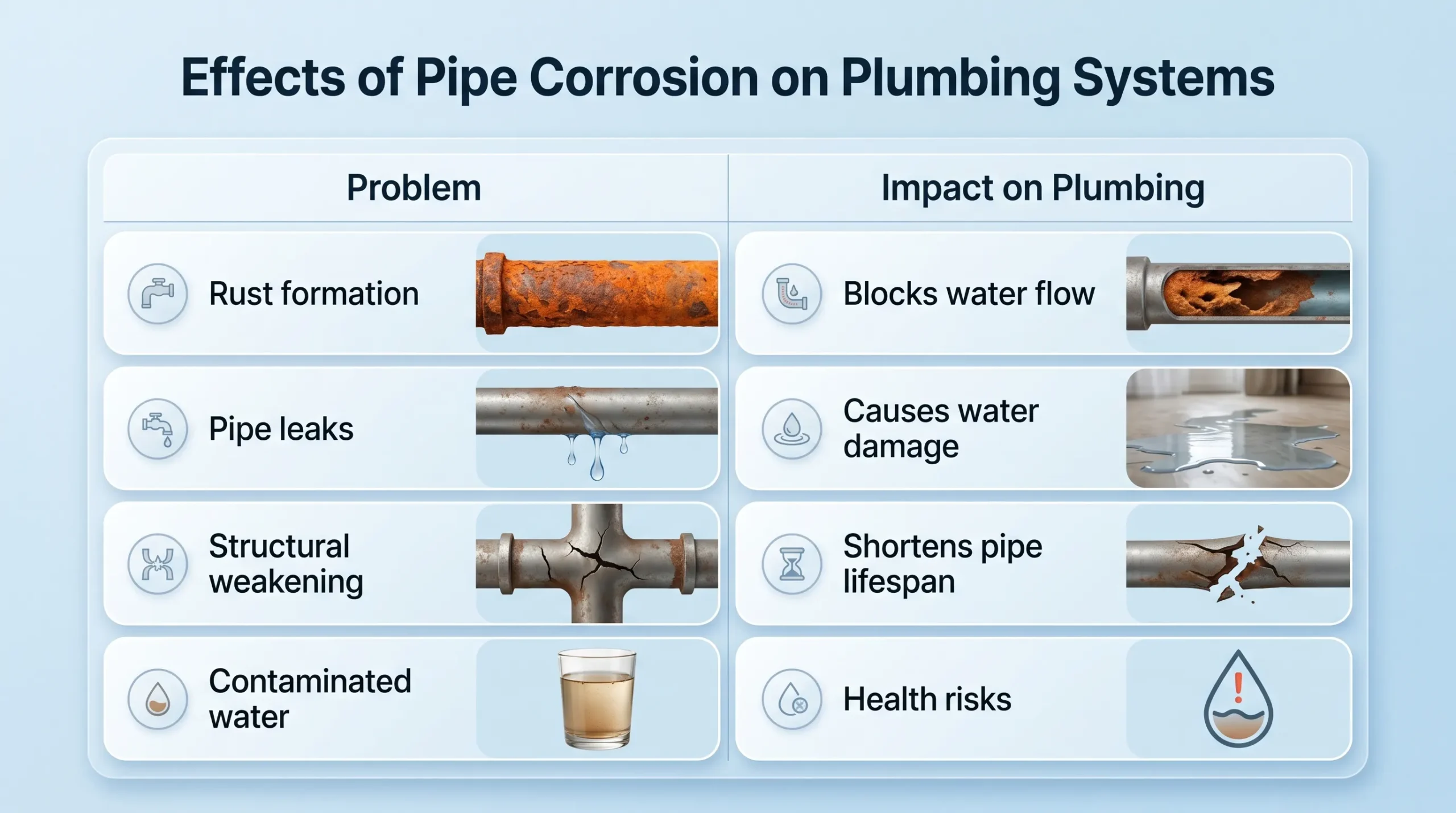
Ignoring corrosion leads to various issues. The effects of corrosion in plumbing pipes impact both safety and pipe quality.
Major consequences include:
- Water is contaminated due to rust particles
- Structural damage in plumbing systems
- Sudden Pipe leaks and bursts
- Rise in maintenance costs
- Reduced the efficiency of water flow
| Problem | Impact on Plumbing |
|---|---|
| Rust formation | Blocks water flow |
| Pipe leaks | Causes water damage |
| Structural weakening | Shortens pipe lifespan |
| Contaminated water | Health risks |
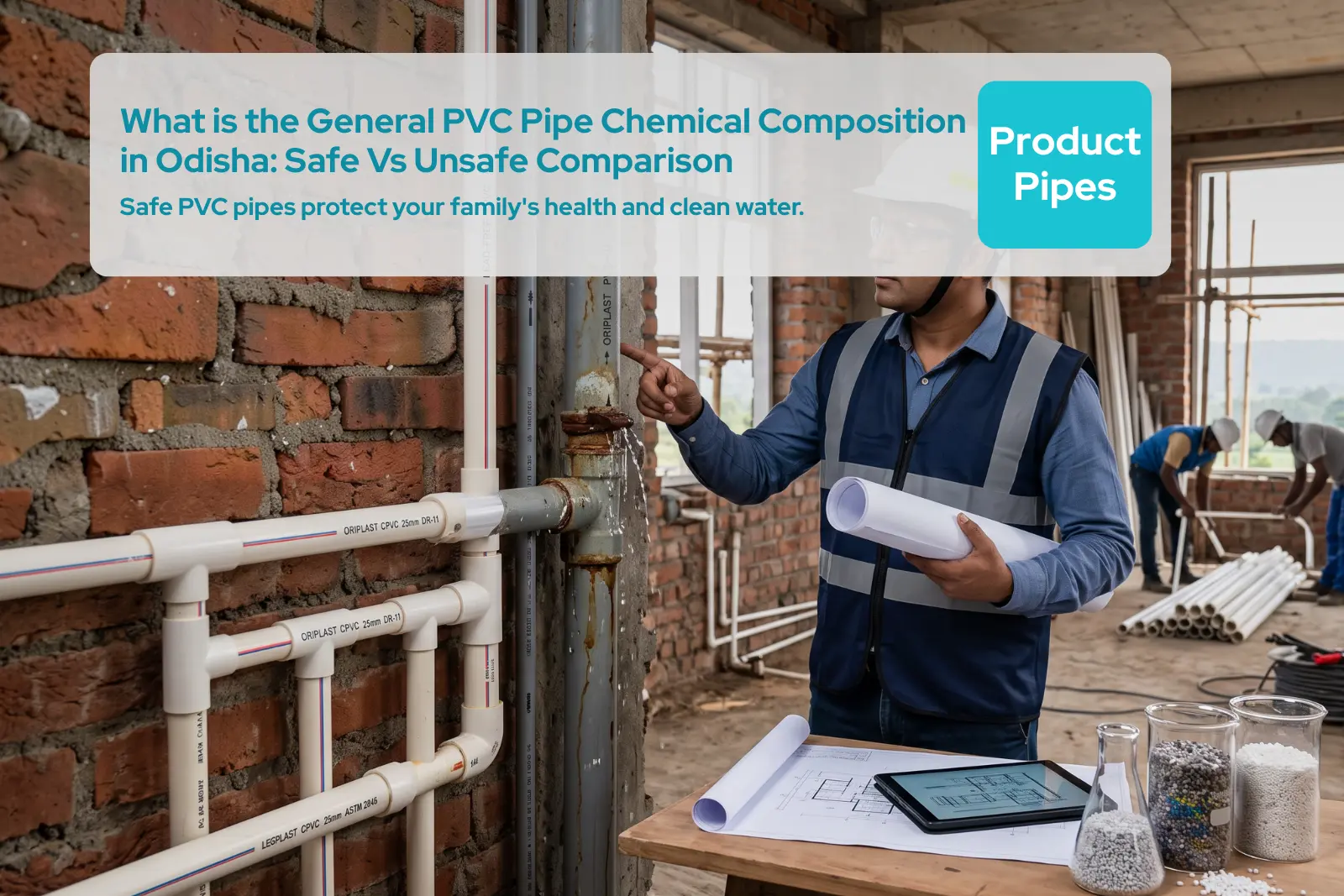
So, knowing the effects of corrosion in plumbing pipes helps property owners take necessary steps for prevention and maintenance. Choosing corrosion resistant PVC pipes can eliminate plumbing issues.
How Can You Prevent Corrosion in Pipes Effectively?
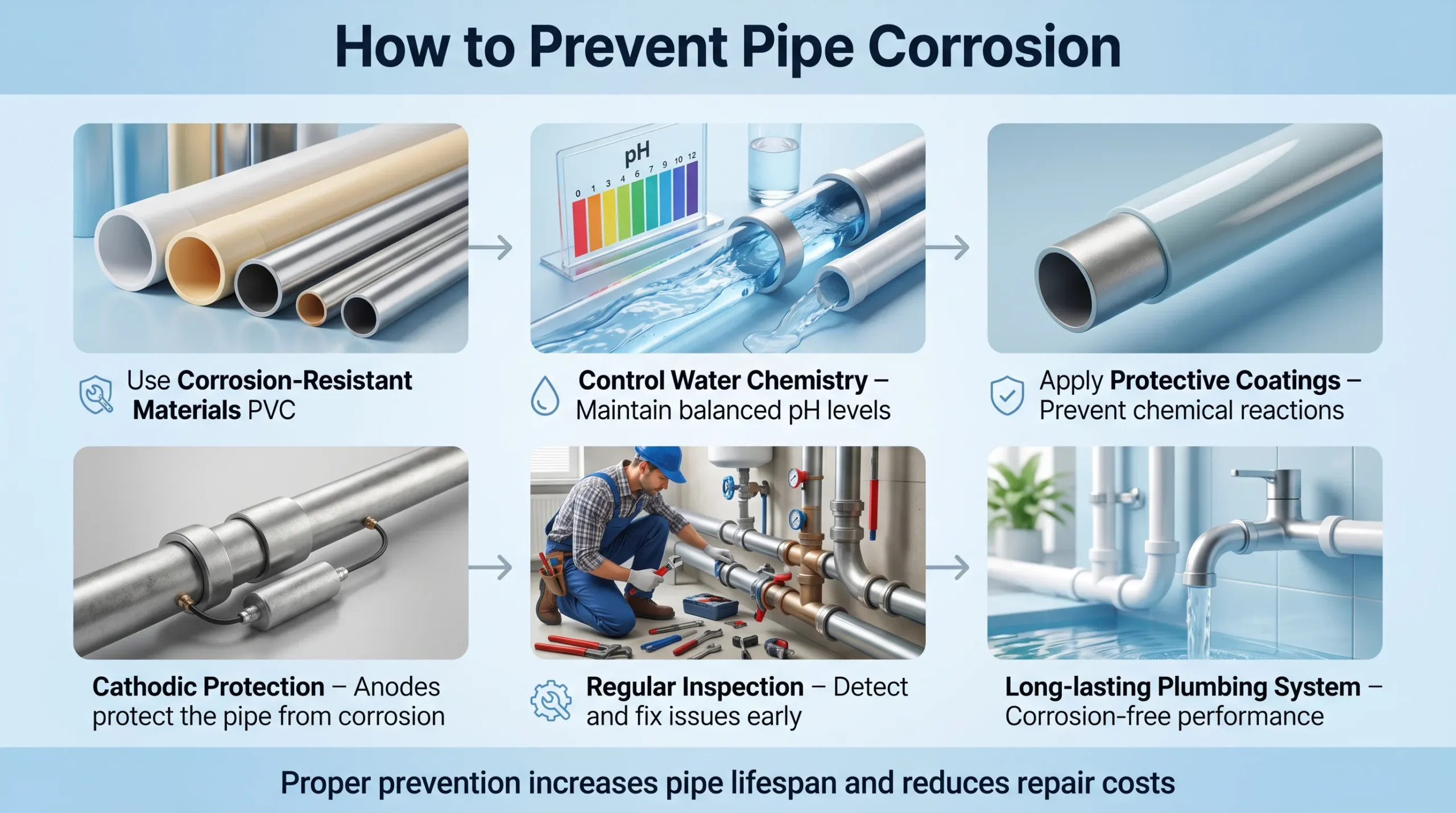
The rust-free water pipe solution, which can significantly extend the life of plumbing systems.
1. Use Corrosion-Resistant Materials
Modern plumbing systems use materials like :
- PVC
- CPVC
- Stainless steel
These corrosion resistant PVC pipe materials resist rust and chemical reactions more than traditional metal pipes.
2. Control Water Chemistry
Maintaining balanced pH levels can avoid corrosion risk. Using water treatment systems can help to adjust mineral content and acidity.
3. Apply Protective Coatings
Add special coatings to protect the layer on the pipe surfaces to prevent chemical reactions. These coatings act as a barrier between water and metal.
4. Cathodic Protection
This technique uses sacrificial anodes to absorb corrosive reactions. The anodes corrode instead of the main pipe.
5. Regular Inspection and Maintenance
Routine inspections can help to identify corrosion early. Maintenance professionals can replace damaged sections before major leaks occur.
Explore our PVC plumbing pipes for corrosion-free water flow.
These pipe corrosion prevention methods are the best way to maintain a healthy plumbing infrastructure.
How Can You Make Your Plumbing System Last Longer?
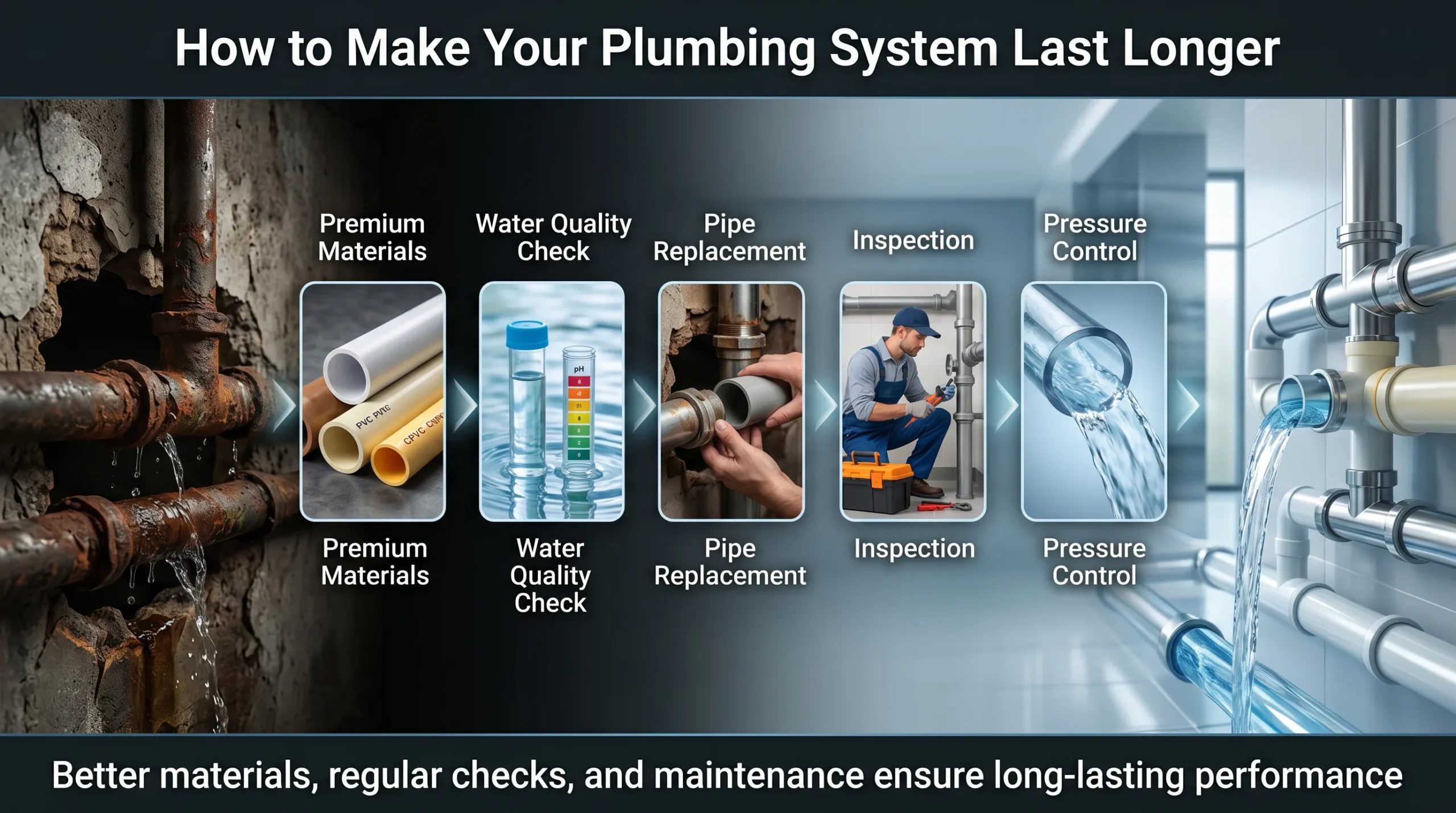
Long-lasting plumbing systems can be sustained if you know how to prevent pipe corrosion to get a more reliable water supply.
Follow these best practices:
- Always use premium-quality plumbing materials
- Check the water quality regularly
- Change the old pipes before they develop corrosion
- Schedule routine inspections
- Maintain proper water pressure levels
Homeowners often wonder how to prevent pipe corrosion because early detection can save thousands in repair costs.
The principles of Pipe Corrosion Causes and Prevention highlight the importance of combining good materials, proper installation, and consistent monitoring.
Final Words
Knowing the pipe rust prevention tips can help to keep your plumbing system safe, avoid being damaged and reduce costly repairs. Regular inspection, good water quality, and using corrosion resistant PVC pipe can stop the corrosion risks and keep your water system safe and reliable for years.
For the best quality PVC pipes, contact Mangalam Pipes and Tank Manufacturing in Odisha.
FAQs
1. What is the major factor for corrosion in pipes?
Major factors are acidity, temperature, and bacterial activity, which accelerate the process.
2. How can homeowners avoid pipe corrosion?
Homeowners can prevent corrosion by maintaining balanced water chemistry, using corrosion-resistant materials, and scheduling regular plumbing inspections.
3. What are the impacts of corrosion in plumbing pipes?
The effects of corrosion in plumbing pipes include leaks, water contamination, structural damage, and reduced water pressure.
4. Which pipes are best for corrosion resistance?
PVC, CPVC, and stainless steel are better than traditional iron or steel pipes.
5. How often should plumbing systems be inspected for corrosion?
Expert inspection is required at least once a year to detect corrosion early and avoid costly repairs.