

When it comes to “health is wealth “, clean water keeps your family safe and healthy. But many people forgot to clean their water tank. If your tank stays unclean, the water you use every day can carry bacteria, mud, and harmful germs. For those reasons, knowing how to clean a water tank at Home becomes very important.
Therefore, by taking the right steps and basic tools, you can clean your tank safely. In this guide, you will learn how to clean a water tank at Home simply and practically.
Key Takeaways
- Learning how to clean a Water Tank at Home can protect your family from harmful bacteria and waterborne diseases.
- Follow the steps in the Water Tank Cleaning Process for draining, scrubbing, disinfecting, rinsing, and refilling.
- Maintaining safety rules while cleaning the overhead tank can avoid accidents
- Following simple Water Tank Cleaning Tips, like closing the lid and checking for leakage, can prevent contamination.
- Clean the water tank every 3–6 months for safe and hygienic water
- Regular cleaning improves water quality, prevents bad odour, and ensures better health for your family.
Why Water Tank Cleaning is Important
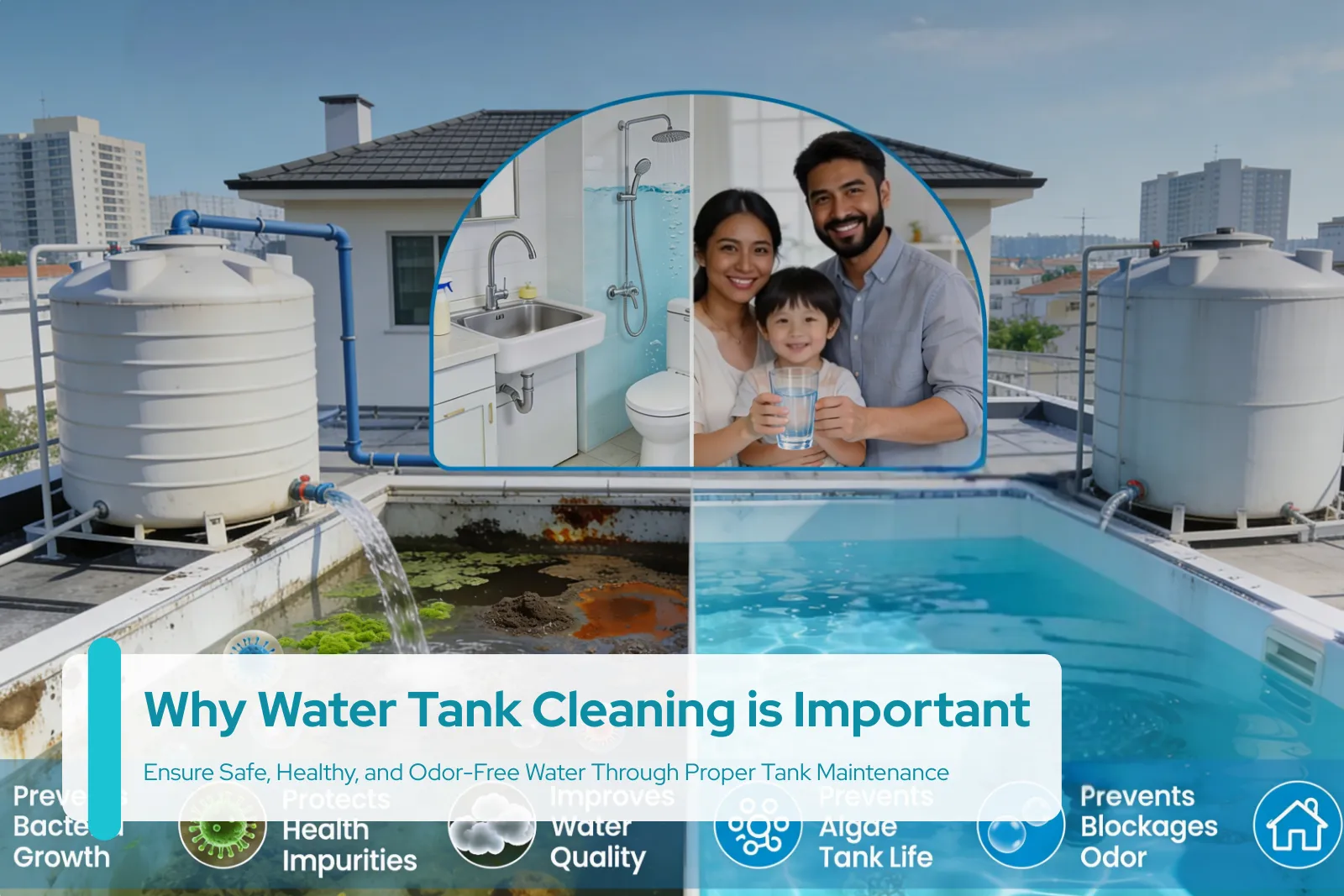
The water stored in your tank is used for many purposes, like drinking, cooking, bathing, and washing. If it is not clean, then dirt, algae, rust, and sludge settle at the bottom. Ignoring your water tank, then bacteria start growing inside.
Dirty water can cause:
- Stomach infections
- Skin irritation
- Bad odour in water
- Cloudy or yellow water
Knowing how to clean a water tank at home can protect your family from these risks. Clean water enhances overall health and gives peace of mind.
How Often Should You Clean a Water Tank?
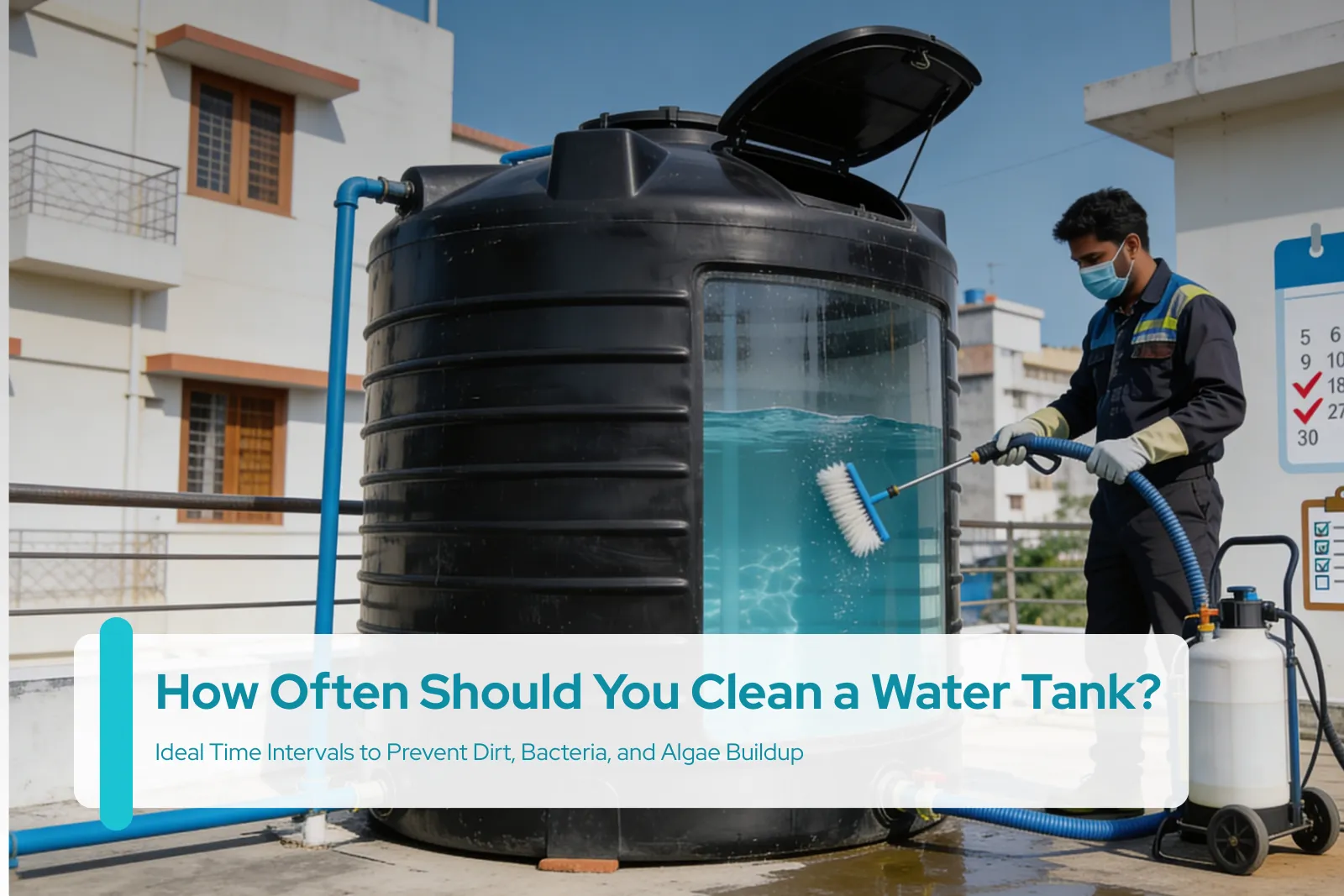
Are you thinking How Often Should You Clean Water Tank? The expert says that cleaning every 3 to 6 months is best. If you have hard water or a muddy supply, then you need to clean frequently.
You should check your tank immediately if:
- Water have bad odour
- Observing algae growth
- Water looks discoloured
- Family members often fall sick
Regular cleaning keeps your water fresh and safe.
Things Required for Cleaning
When you prepare to clean your water tank, gather these items first:
- Rubber gloves
- Face mask
- Hard brush with a long handle
- Bucket
- Mild disinfectant or bleaching powder
- Clean water supply
These simple tools help you clean safely and properly.
Water Tank Cleaning Process (Step-by-Step Guide)
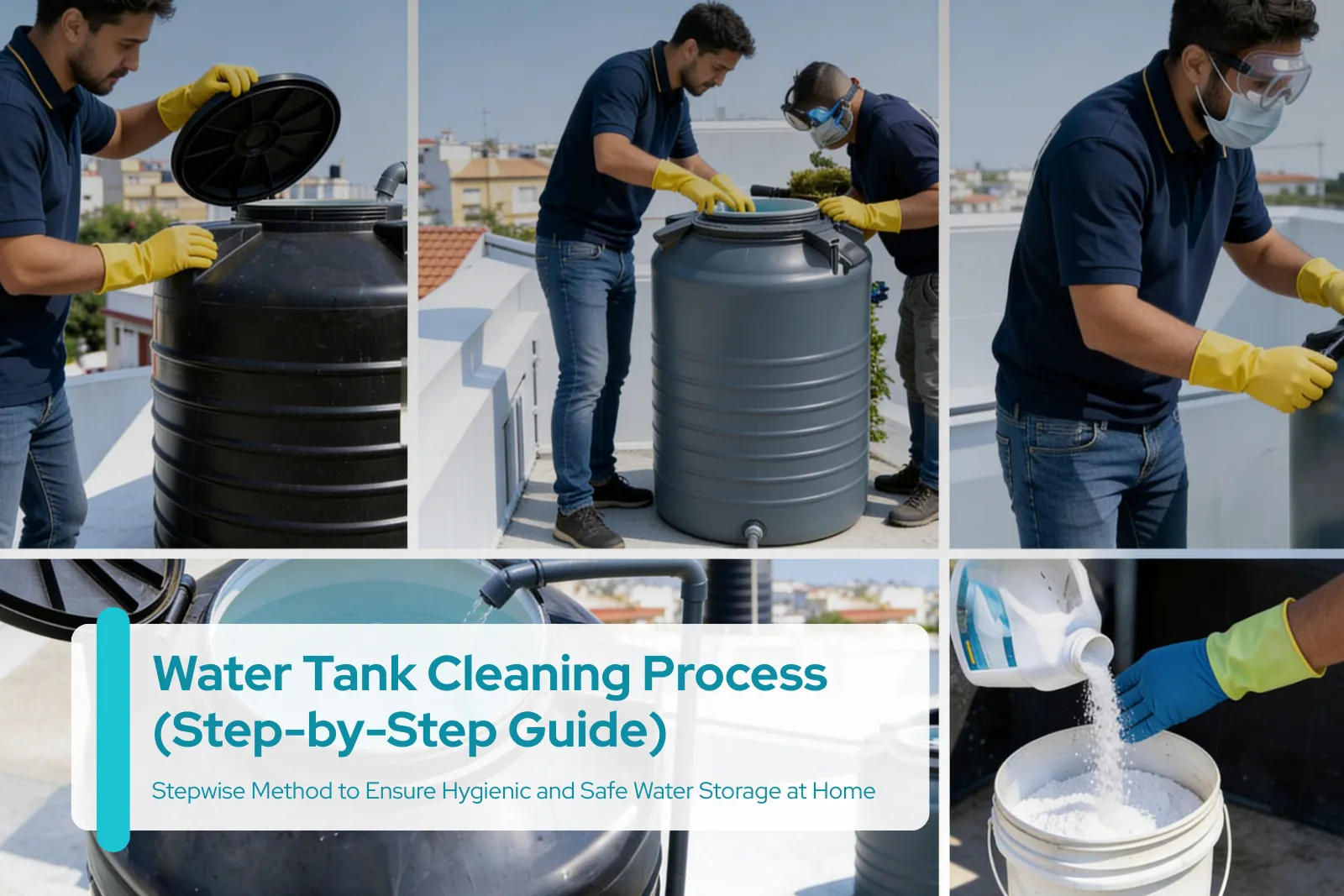
Now, let’s gather information on the Water Tank Cleaning Process in easy steps.
Step 1: Drain the Tank Completely
First Step, how to clean a water tank at home is to turn off the water supply. Open the water tank tap and drain all the stored water, or, as an alternative, open the outlet. Just leave a little water at the bottom, so that all the sludge can be removed easily.
Step 2: Remove Sludge and Dirt
Second step, use a brush to scrub the walls and bottom of the tank. Mainly focus on corners where dirt collects. Remove mud, algae, and sediment properly. Do not use any harsh chemicals. Just doing well scrubbing makes a big difference.
Step 3: Disinfect the Tank
Just add bleaching powder or mild disinfectant to water. Sprinkle or spread on tank walls. Keep it for 1–2 hours. These steps can help to kill bacteria and harmful germs. Disinfection plays a major role in the Water Tank Cleaning Process.
Step 4: Rinse Thoroughly
Wash the tank with clean water a maximum of two or three times. Make sure that there is no chemical residue inside your water tank. Proper rinsing ensures safe water storage.
Step 5: Refill the Tank
Close the outlet and fill the tank with fresh water. Check if the water looks clean and smells normal. Now you have completed How to Clean a Water Tank at Home without Professional Help.
If you want to replace your water tank, then contact the best Water tank suppliers in Bhubaneswar, Mangalam Tanks & Pipes!
How to Clean an Overhead Water Tank Safely
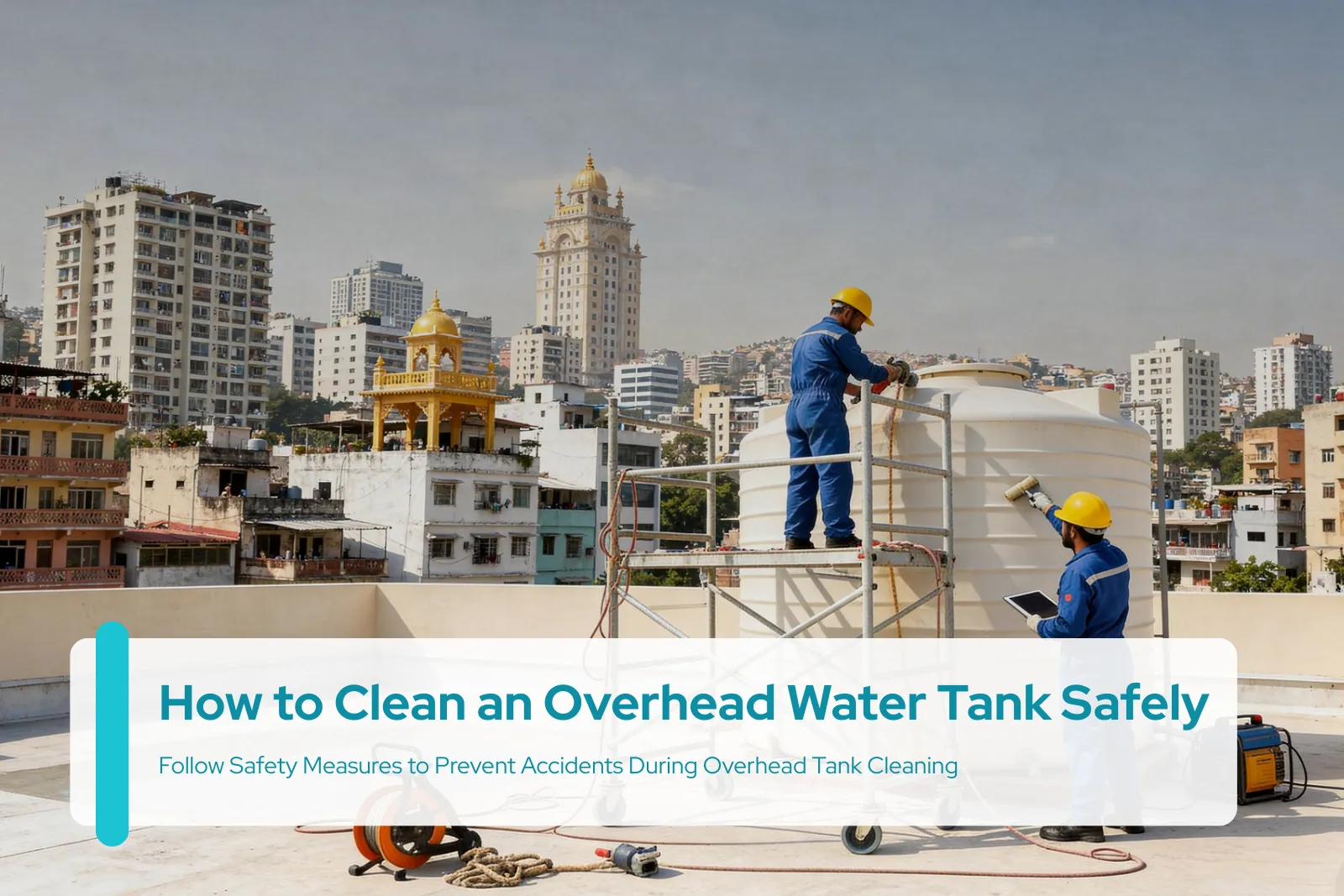
Cleaning over tank needs extra care; many people search for how to Clean Overhead Water Tank because it requires safety cleaning due to its height.
Follow these precautions:
- Use a strong and stable ladder
- Do not work alone
- Wear gloves and a mask
- Avoid slipping inside the tank
When you clean an overhead tank, always be careful and move slowly. Safety should always come first while learning how to clean a water tank at Home.
Water Tank Cleaning Tips
There are some crucial Water Tank Cleaning Tips that can keep your tank water clean.
- Always close your tank lid
- Water filter installation is needed
- Look for cracks or leaks
- Clean the debris from the roof regularly
- Do not store water for too longer time
These small habits can help you to reduce your water contamination and keep your tank clean for a longer time. Always remember these Water Tank Cleaning Tips that save time and effort in the future.
Signs Your Tank Needs Immediate Cleaning
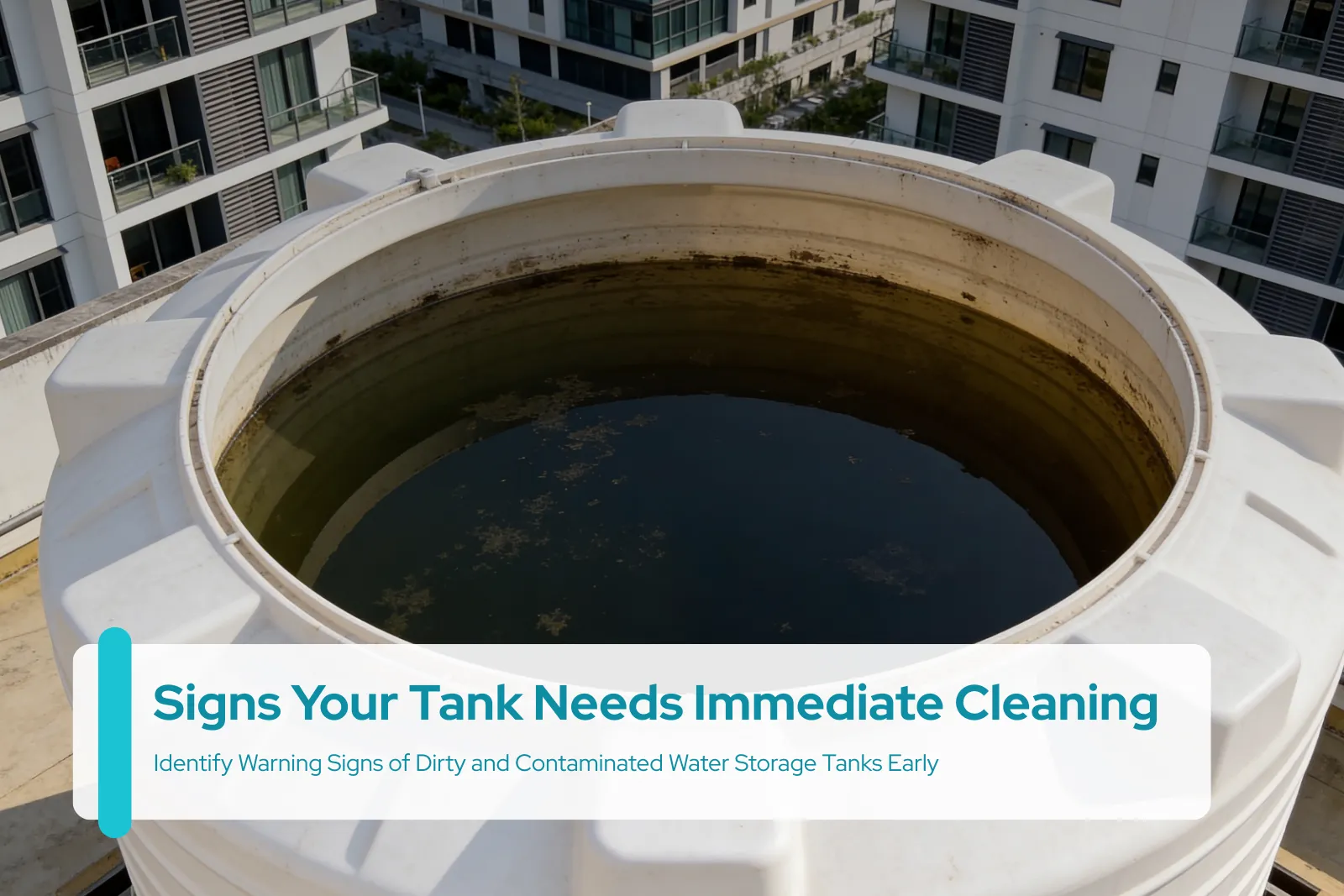
Sometimes, your tank gives warning signs. Do not ignore them.
- Muddy water
- Green algae inside
- Bad smell from taps
- Reduced water pressure
- Frequent stomach problems
If you observe these signs, then start the process of how to clean a Water Tank at Home immediately. Delaying can increase health risks.
DIY vs Professional Cleaning

You can only do the basic cleaning. In this blog, the steps are already discussed, but you have another option.
You can call professionals if:
- The tank is too big
- Heavy sludge exists
- You cannot access the overhead tank safely
Professional services use advanced tools and vacuum machines. They do the Water Tank Cleaning Process more deeply.
Final Thoughts
Clean water supports a healthy life. A neglected tank can gradually spread germs in your home. Learning how to clean a water tank at Home gives you control over your water quality. Do not wait for the complete tank to be dirty. Follow the right steps and clean your water tank every few months. When you know the steps on how to clean a Water Tank at Home, you can protect your family’s health and ensure safe water every day.
Frequently Asked Questions (FAQs)
1. How frequent Should You Clean Water Tank?
You should clean your water tank every 3–6 months. In areas with hard or muddy water, clean it more frequently.
2. Can my water tank be cleaned without bleaching powder?
Yes. You can use mild disinfectants. However, bleaching powder helps kill bacteria effectively.
3. How to Clean an Overhead Water Tank Safely?
Use a strong ladder, wear gloves, and avoid working alone. Always focus on safety while cleaning.
4. How long does the Water Tank Cleaning Process take?
It usually takes 2–4 hours, depending on tank size and dirt level.
5. Is professional water tank cleaning necessary?
Not always. You can manage regular cleaning yourself. Hire professionals if the tank has heavy contamination or difficult access.