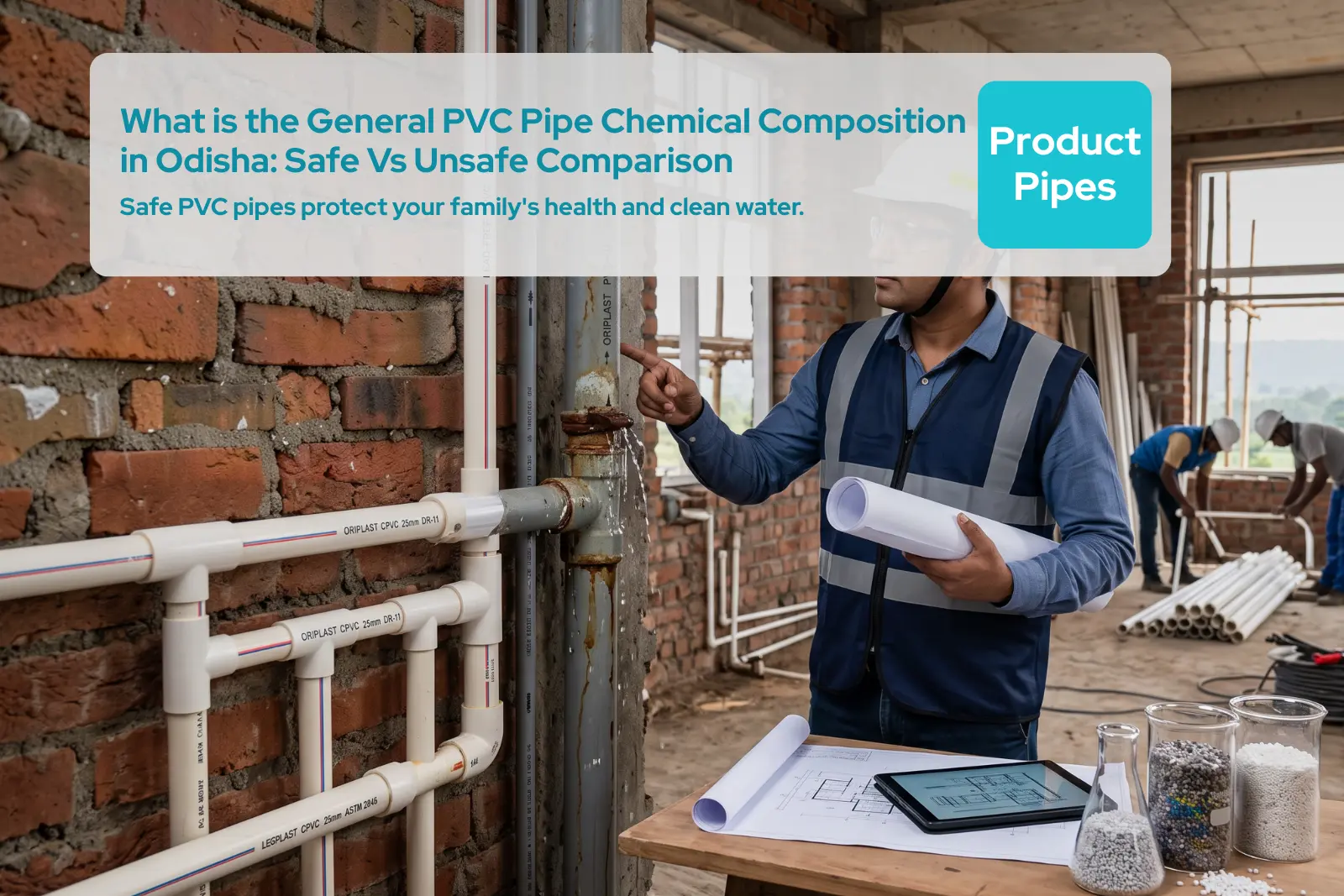

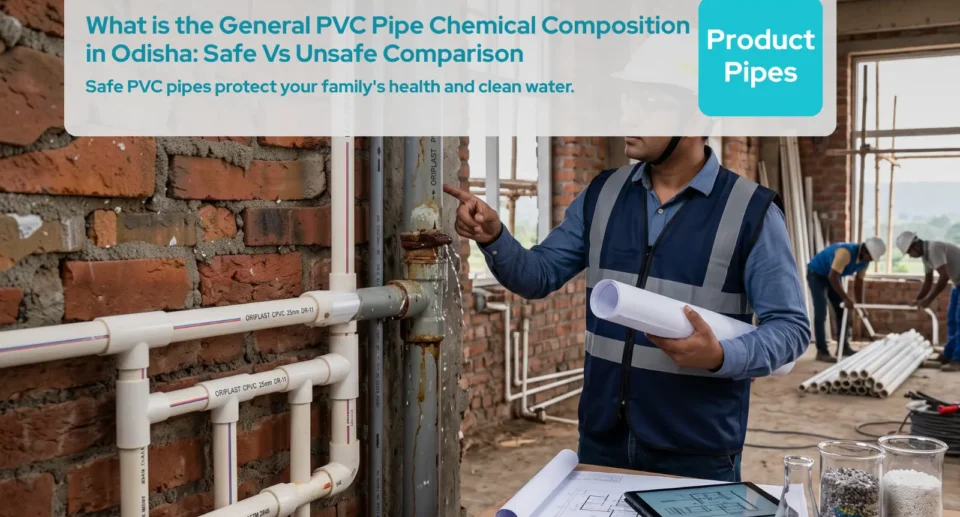
Water pipes silently carry a very important resource: water, but we fail to understand what the effect of the quality of the pipe used could have on our and our family’s health.
It is essential to have a basic understanding of thePVC pipe chemical composition, so that you can remain aware of the harmful effects of low-quality pipes which may carry life threatening health ailments.
What is the standard PVC pipe chemical composition used in plumbing?
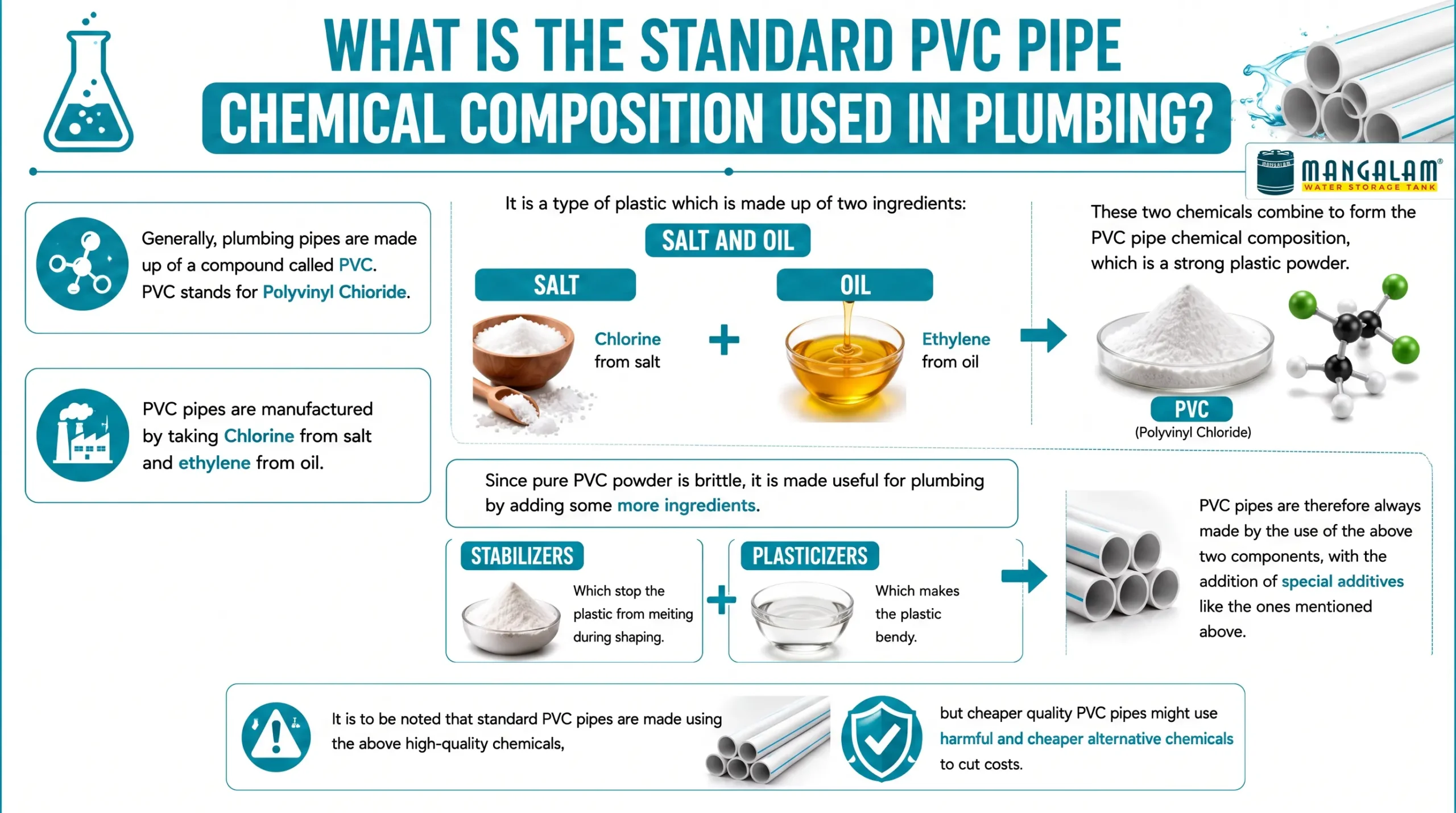
Generally, plumbing pipes are made up of a compound called PVC. PVC stands for Polyvinyl Chloride.
It is a type of plastic which is made up of two ingredients: salt and oil. PVC pipes are manufactured by taking Chlorine from salt and ethylene from oil. These two chemicals combine to form the PVC pipe chemical composition, which is a strong plastic powder.
Since pure PVC powder is brittle, it is made useful for plumbing by adding some more ingredients. These ingredients include stabilizers (which stop the plastic from melting during shaping), and plasticizers (which makes the plastic bendy).
PVC pipes are therefore always made by the use of the above two components, with the addition of special additives like the ones mentioned above.
It is to be noted that standard PVC pipes are made using the above high-quality chemicals, but cheaper quality PVC pipes might use harmful and cheaper alternative chemicals to cut costs.
How do safe and unsafe PVC pipes differ in Odisha?
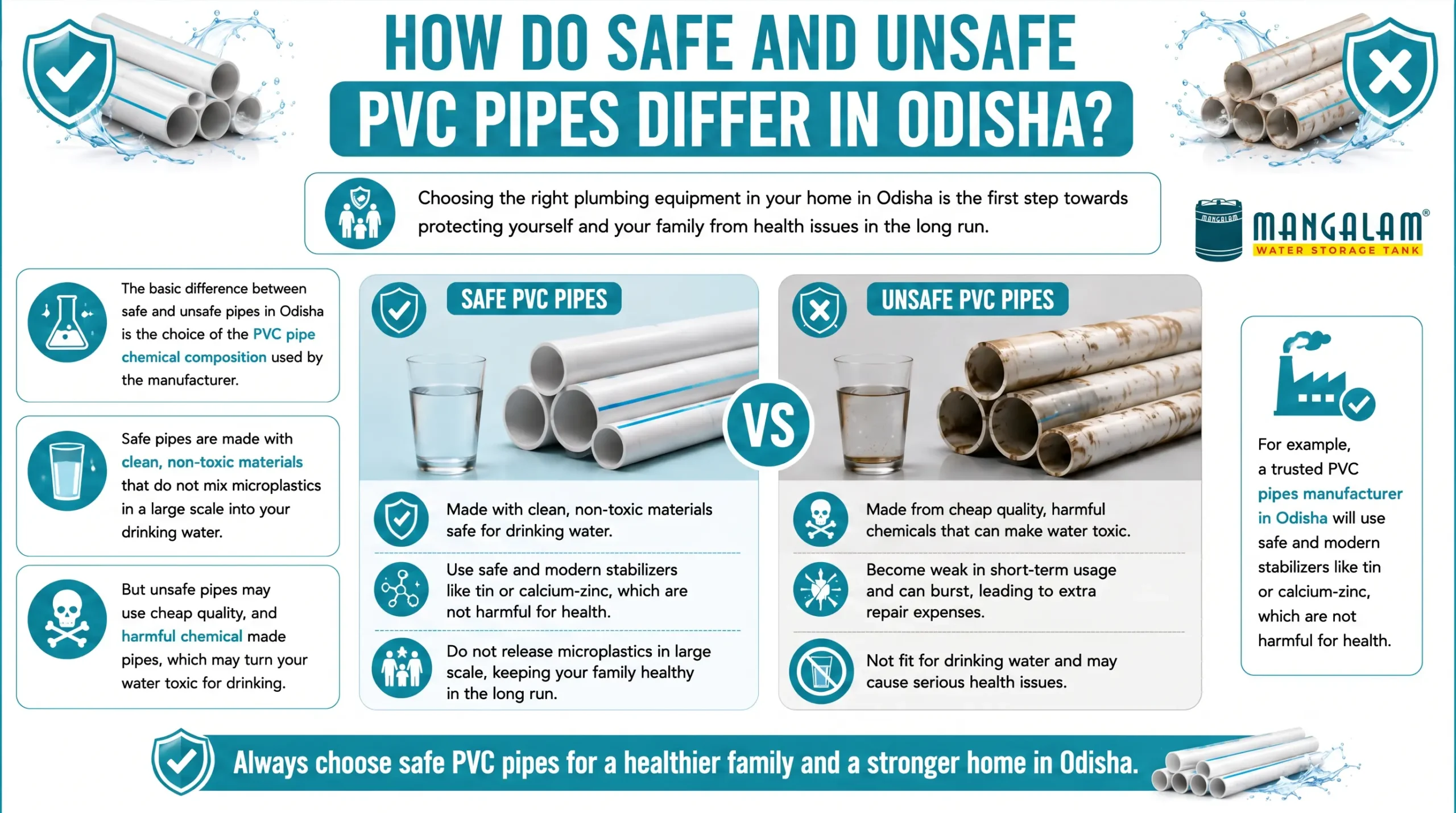
Choosing the right plumbing equipment in your home in Odisha is the first step towards protecting yourself and your family from health issues in the long run.
The basic difference between safe and unsafe pipes in Odisha is the choice of the PVC pipe chemical composition used by the manufacturer.
Safe pipes are made with clean, non-toxic materials that do not mix microplastics in a large scale into your drinking water. But unsafe pipes may use cheap quality, and harmful chemical made pipes, which may turn your water toxic for drinking.
For example, a trusted PVC pipes manufacturer in Odisha will use safe and modern stabilizers like tin or calcium-zinc, which are not harmful for health.
On the other hand, low-quality pipes, made from unsafe chemicals, become weak in short-term usage and can burst, leading to extra repair expenses. They are also not fit for drinking water.
How Phthalates and Low-Grade Lead Stabilizers in Local PVC Pipes Damage Your Health?
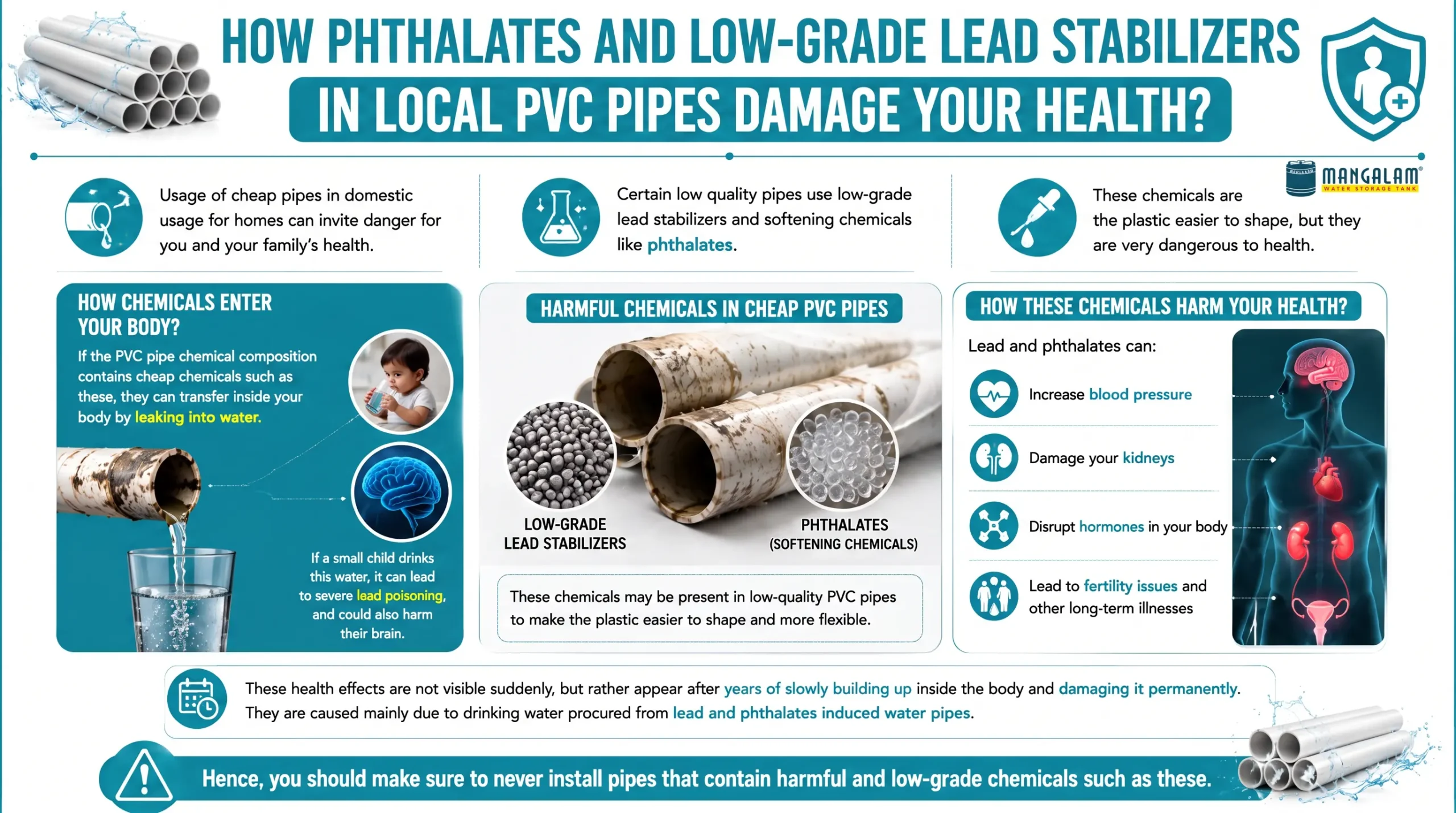
Usage of cheap pipes in domestic usage for homes can invite danger for you and your family’s health. Certain low quality pipes use low-grade lead stabilizers and softening chemicals like phthalates.
These chemicals are added to make the plastic easier to shape, but they are very dangerous to health.
If the PVC pipe chemical composition contains cheap chemicals such as these, they can transfer inside your body by leaking into water. If a small child drinks this water, it can lead to severe lead poisoning, and could also harm their brain.
Lead and phthalates can increase blood pressure, damage your kidneys, and disrupt hormones in your body. This could lead to fertility issues and other long-term illnesses.
These health effects are not visible suddenly, but rather appear after years of slowly building up inside the body and damaging it permanently. They are caused mainly due to drinking water procured from lead and phthalates induced water pipes.
Hence, you should make sure to never install pipes that contain harmful and low-grade chemicals such as these.
What safety standards should you check before buying PVC pipes in Odisha?
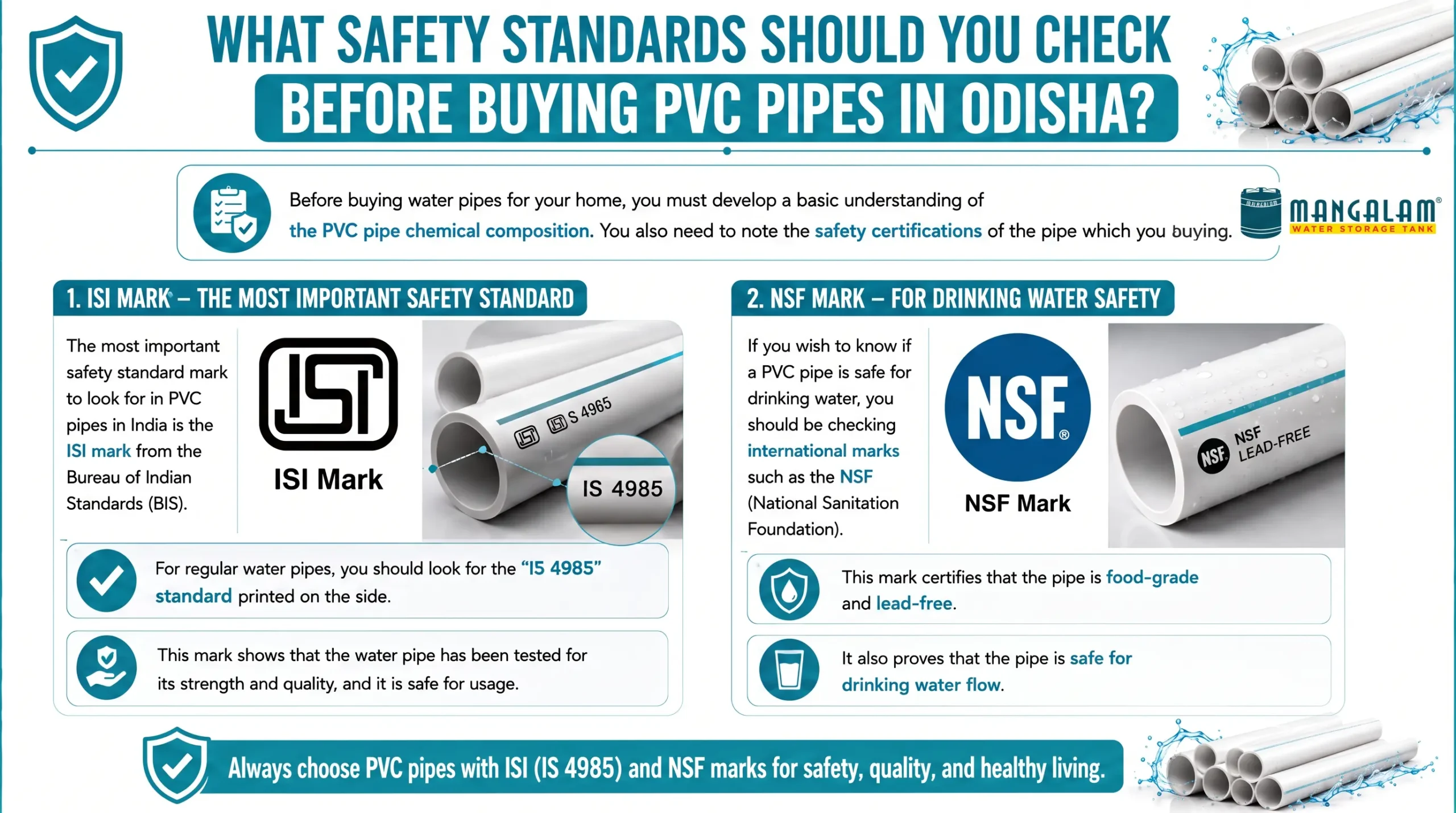
Before buying water pipes for your home, you must develop a basic understanding of the PVC pipe chemical composition. You also need to note the safety certifications of the pipe which you are buying.
The most important safety standard mark to look for in PVC pipes in India is the ISI mark from the Bureau of Indian Standards (BIS).
For regular water pipes, you should look for the “IS 4985” standard printed on the side.
This mark shows that the water pipe has been tested for its strength and quality, and it is safe for usage.
If you wish to know if a PVC pipe is safe for drinking water, you should be checking international marks such as the NSF (National Sanitation Foundation).
This mark certifies that the pipe is food-grade and lead-free. It also proves that the pipe is safe for drinking water flow.
How can you identify and choose lead-free PVC pipes for your home?
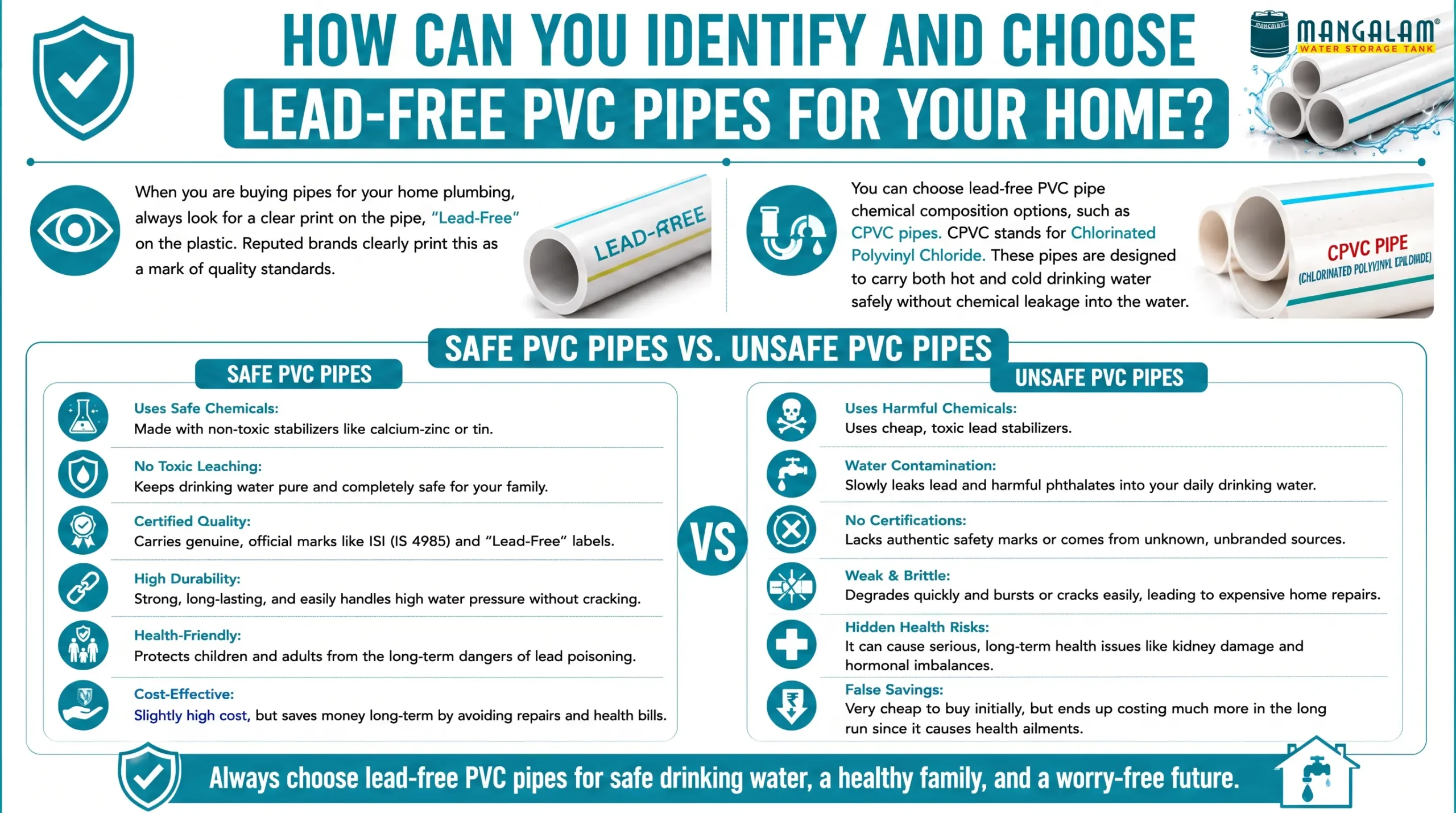
When you are buying pipes for your home plumbing, always look for a clear print on the pipe, “Lead-Free” on the plastic. Reputed brands clearly print this as a mark of quality standards.
You can choose lead-free PVC pipe chemical composition options, such as CPVC pipes. CPVC stands for Chlorinated Polyvinyl Chloride. These pipes are designed to carry both hot and cold drinking water safely without chemical leakage into the water.
Safe PVC Pipes Vs. Unsafe PVC Pipes
| Safe PVC Pipes | Unsafe PVC Pipes |
|---|---|
| Uses Safe Chemicals: Made with non-toxic stabilizers like calcium-zinc or tin. | Uses Harmful Chemicals: Uses cheap, toxic lead stabilizers. |
| No Toxic Leaching: Keeps drinking water pure and completely safe for your family. | Water Contamination: Slowly leaks lead and harmful phthalates into your daily drinking water. |
| Certified Quality: Carries genuine, official marks like ISI (IS 4985) and “Lead-Free” labels. | No Certifications: Lacks authentic safety marks or comes from unknown, unbranded sources. |
| High Durability: Strong, long-lasting, and easily handles high water pressure without cracking. | Weak & Brittle: Degrades quickly and bursts or cracks easily, leading to expensive home repairs. |
| Health-Friendly: Protects children and adults from the long-term dangers of lead poisoning. | Hidden Health Risks: It can cause serious, long-term health issues like kidney damage and hormonal imbalances. |
| Cost-Effective: Slightly high cost, but saves money long-term by avoiding repairs and health bills. | False Savings: Very cheap to buy initially, but ends up costing much more in the long run since it causes health ailments. |
Conclusion
To conclude, water pipes are the heart of a home since they are responsible for carrying water, which is very much essential for the human body.
One should never compromise their health for money and choose low-quality lead and pthalates induced pipes. Rather, you should invest wisely, with a long-term view in mind about safe drinking water and healthy life.
After checking safety standard certifications and food-grade and lade-free marks, you can rest assured that the water pipe is of high-quality and safe for you and your family.
If you liked our blog, consider going through our other blogs.
Frequently Asked Questions (FAQs)
What is the standard PVC pipe chemical composition?
The PVC pipe chemical composition consists of polyvinyl chloride resin which is made from salt and oil. It is further mixed with stabilizers and plasticizers to make it strong and useful for plumbing.
How are PVC pipes made for home plumbing?
For home plumbing, raw PVC powder is mixed with specific additives. Then it is melted and shaped into long tubes using a process called extrusion.
Are standard PVC pipes safe for drinking water in India?
Yes, standard PVC pipes are safe if they use food-grade, lead-free stabilizers, along with certifications on them. You should always check for ISI and NSF certifications to ensure the water is safe for drinking.
Is CPVC better than PVC for home drinking water?
Yes, lead free CPVC pipes are considered safer for drinking water. Especially for hot water they are better, because they do not leak chemicals into water and can withstand high temperatures than regular PVC.
How do safe and unsafe PVC pipes differ?
Safe PVC pipes use non-toxic stabilizers (like tin or calcium-zinc) and are certified. While unsafe PVC pipes use cheap lead stabilizers or phthalates, which can leak toxins into your drinking water.
Do all PVC pipes contain harmful phthalates?
No. While some PVC pipes use phthalates, the PVC pipes used for drinking water systems are typically unplasticized (UPVC), and do not contain harmful phthalates.
How can I find a reliable PVC pipes manufacturer in Odisha?
Look for a manufacturer in Odisha that provides ISI marks (like IS 4985) and offers lead-free or food-grade certified plumbing pipes for domestic use.
Why do some cheap PVC pipes burst quickly?
Cheap pipes have a poor PVC pipe chemical composition. They use low-grade stabilizers and less raw PVC resin. This makes them weak, brittle, and unable to handle water pressure, due to which they burst.
Can I use regular PVC pipes for my water heater?
No. Regular PVC cannot handle hot water temperatures and may melt or release harmful chemicals into the water. You should always use lead free CPVC pipes for hot water in your home.
What does the ISI mark on a PVC pipe mean?
The ISI mark (for example: IS 4985) shows that the pipe meets the Bureau of Indian Standards (BIS) for strength, quality, and safety.