

Concrete Water Tanks Vs. Plastic Water tanks: Which is Better? A Comparative Analysis for Odisha’s Climate

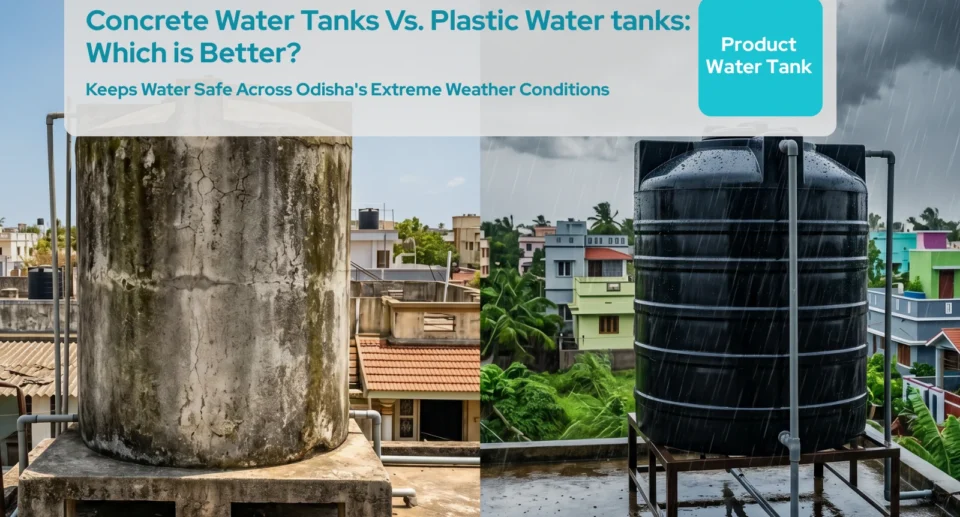
When you are choosing a water tank for your house, “Concrete Water Tanks Vs. Plastic Water tanks” always becomes a topic of great debate.
Odisha is known for its harsh weather conditions including cyclonic storms, so between concrete and plastic water tanks which should be your best bet? Let’s find out in this blog!
1.Which water tank keeps water cooler during Odisha’s hot summers?
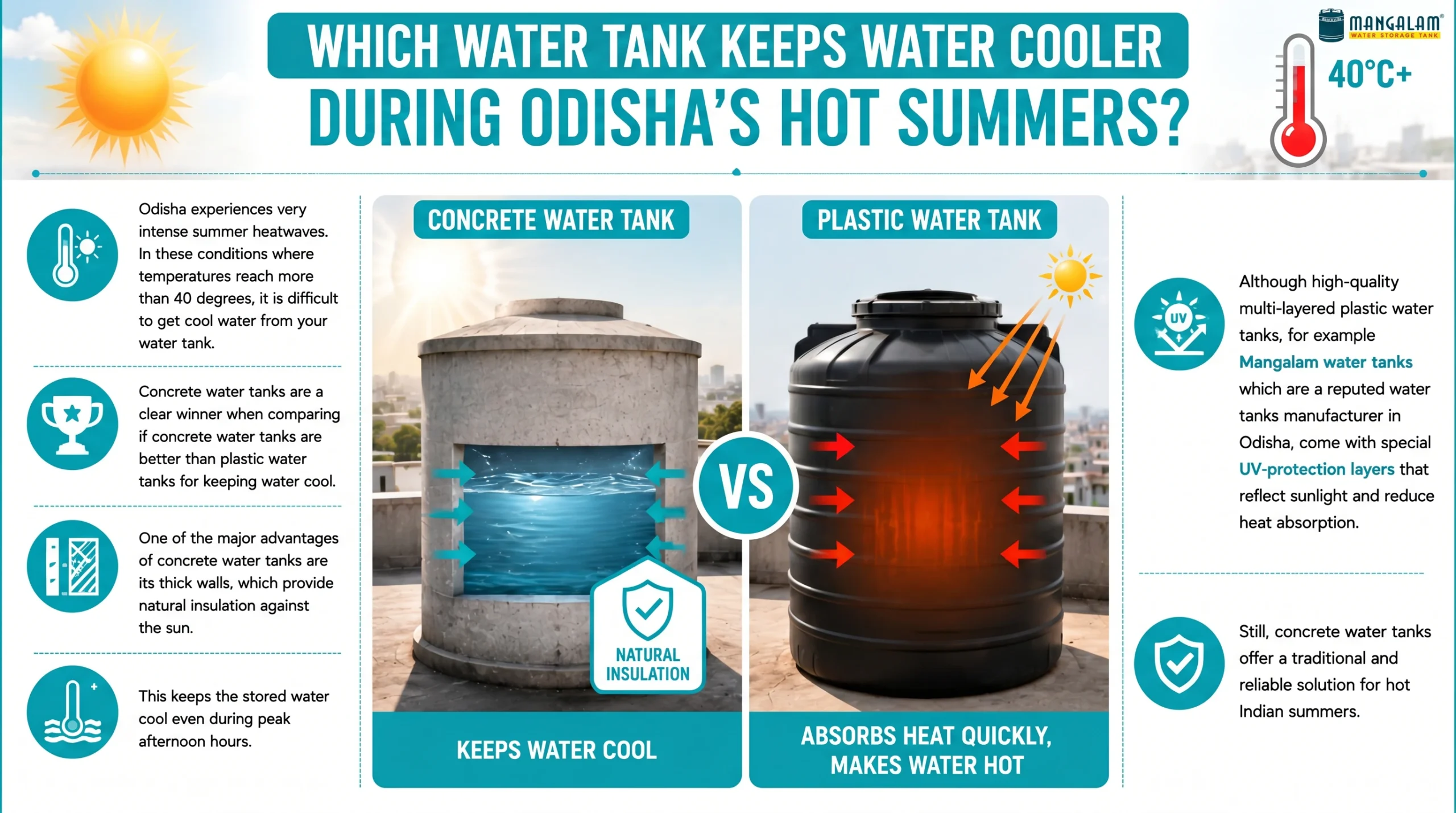
Odisha experiences very intense summer heatwaves. In these conditions where temperatures reach more than 40 degrees, it is difficult to get cool water from your water tank.
Concrete water tanks are a clear winner when comparing if concrete water tanks are better than plastic water tanks for keeping water cool.
One of the major advantages of concrete water tanks are its thick walls, which provide natural insulation against the sun.
This keeps the stored water cool even during peak afternoon hours.
Since plastic water tanks absorb heat quickly, they make stored water very hot.
Although high-quality multi-layered plastic water tanks, for example Mangalam water tanks which are a reputed water tanks manufacturer in Odisha, come with special UV-protection layers that reflect sunlight and reduce heat absorption.
Still, concrete water tanks offer a traditional and reliable solution for hot Indian summers.
2.Which water tank is best for Odisha’s monsoons and cyclones?
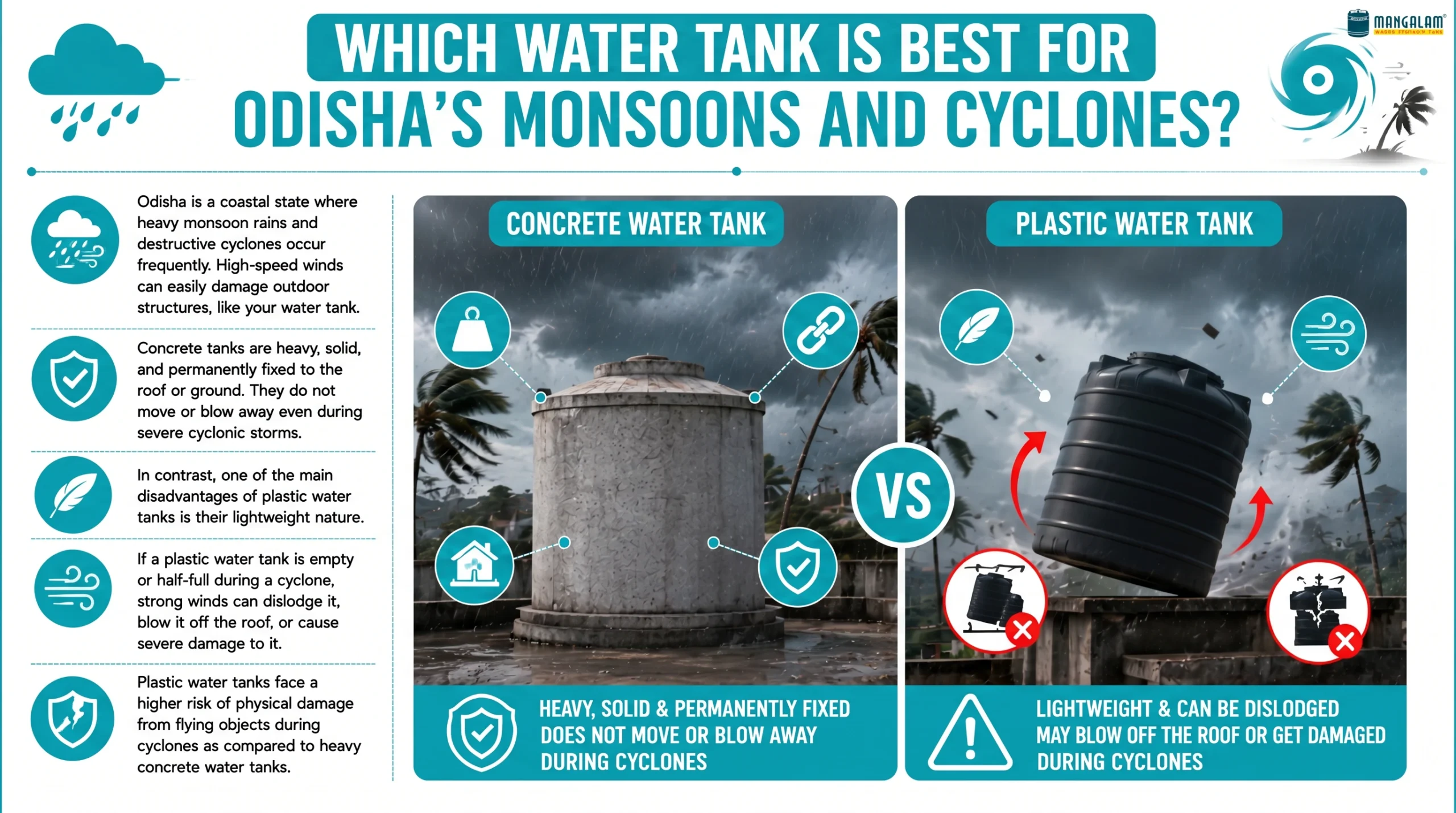
Odisha is a coastal state where heavy monsoon rains and destructive cyclones occur frequently. High-speed winds can easily damage outdoor structures, like your water tank.
Concrete tanks are heavy, solid, and permanently fixed to the roof or ground. They do not move or blow away even during severe cyclonic storms.
In contrast, one of the main disadvantages of plastic water tanks is their lightweight nature.
If a plastic water tank is empty or half-full during a cyclone, strong winds can dislodge it, blow it off the roof, or cause severe damage to it.
Plastic water tanks face a higher risk of physical damage from flying objects during cyclones as compared to heavy concrete water tanks.
3.Is a plastic water tank easier to clean and prevent algae growth?
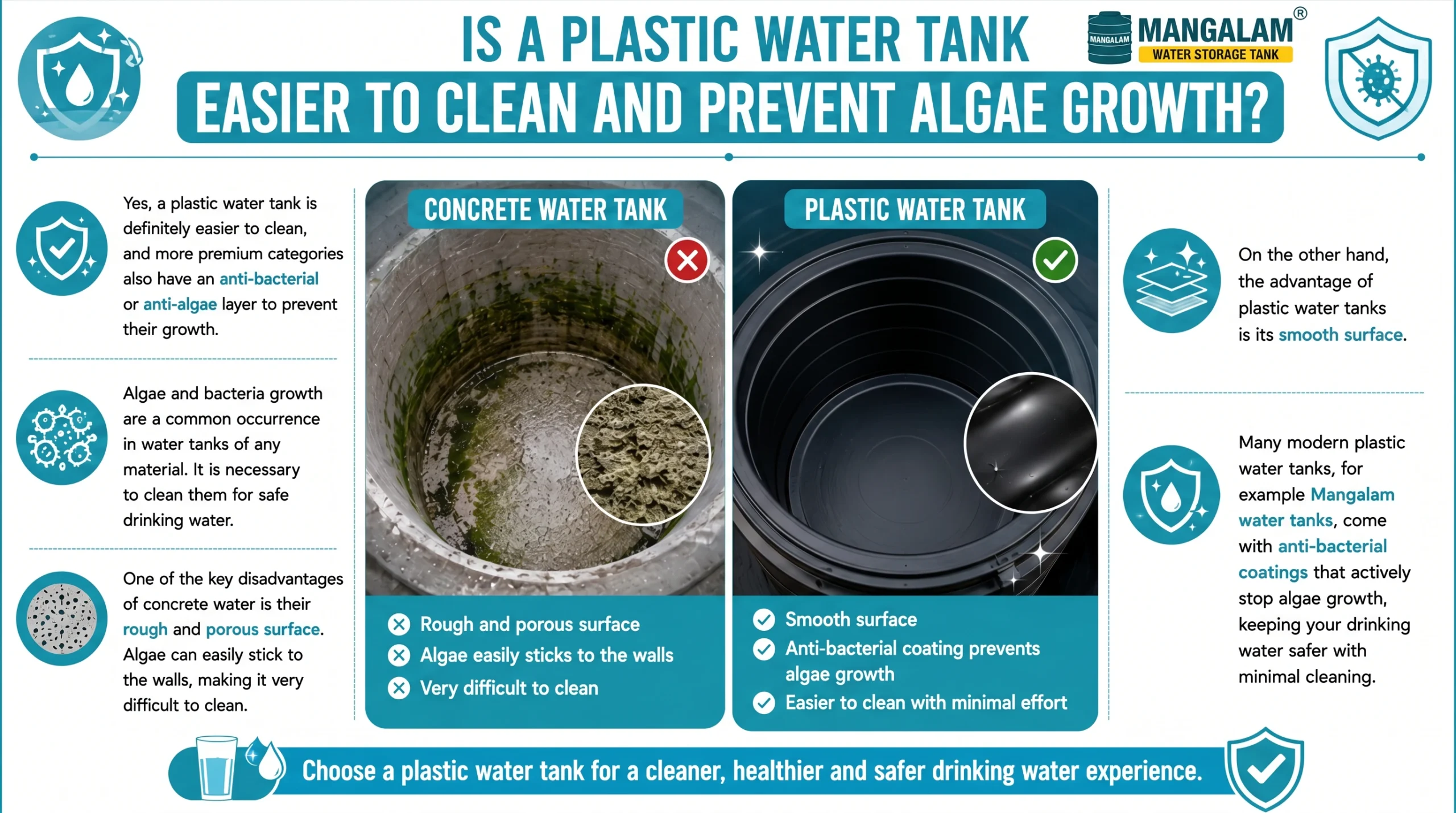
Yes, a plastic water tank is definitely easier to clean, and more premium categories also have an anti-bacterial or anti-algae layer to prevent their growth.
Algae and bacteria growth are a common occurrence in water tanks of any material. It is necessary to clean them for safe drinking water.
One of the key disadvantages of concrete water is their rough and porous surface. Algae can easily stick to the walls, making it very difficult to clean.
On the other hand, the advantage of plastic water tanks is its smooth surface.
Many modern plastic water tanks, for example Mangalam water tanks, come with anti-bacterial coatings that actively stop algae growth, keeping your drinking water safer with minimal cleaning.
4.Which water tank has a long lifespan?
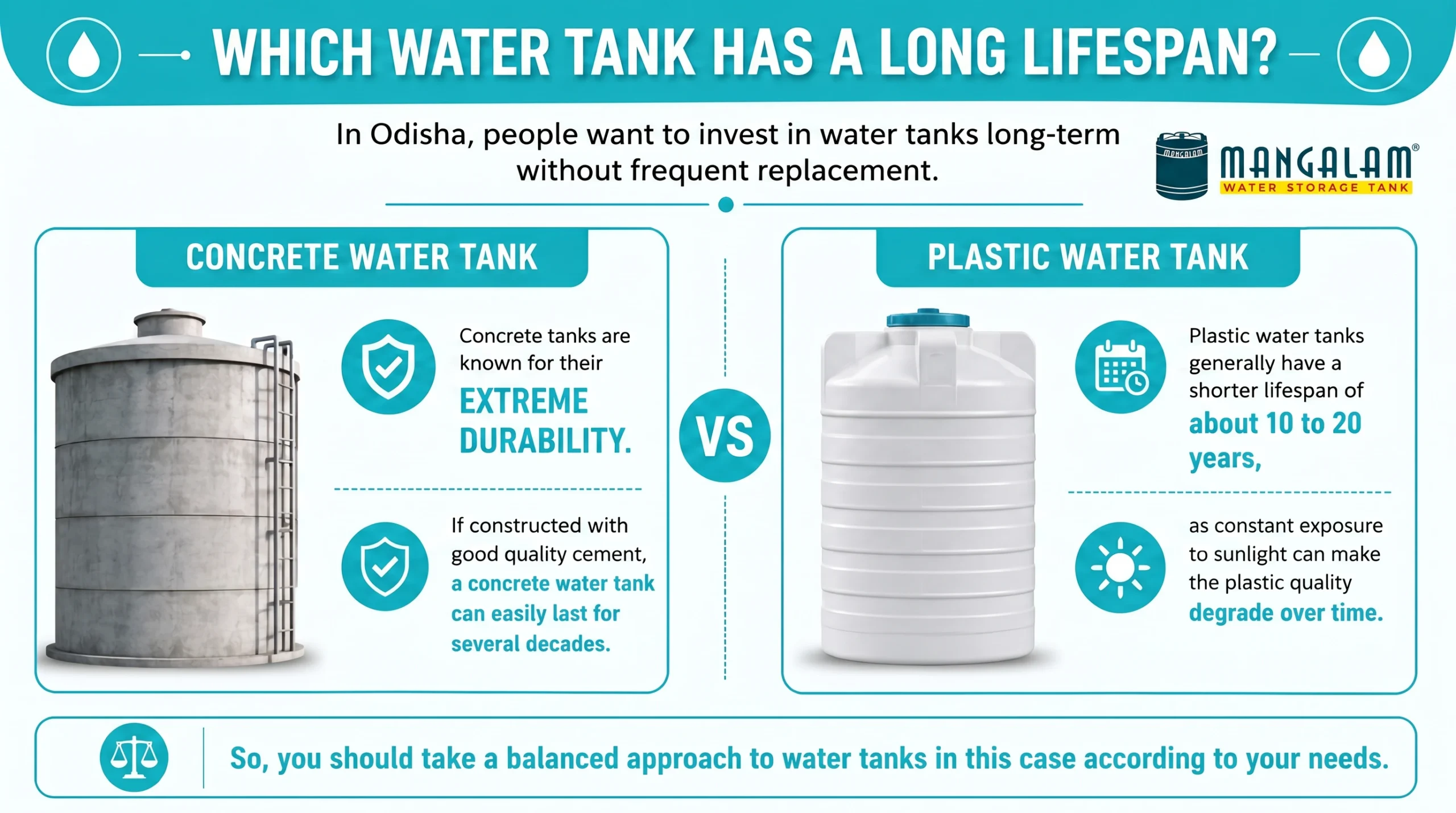
In Odisha, people want to invest in water tanks long-term without frequent replacement.
Concrete tanks are known for their extreme durability.
If constructed with good quality cement, a concrete water tank can easily last for several decades.
However, plastic water tanks generally have a shorter lifespan of about 10 to 20 years, as constant exposure to sunlight can make the plastic quality degrade over time.
So, you should take a balanced approach to water tanks in this case according to your needs Concrete Water Tanks Vs. Plastic Water tanks.
5.Which water tank is more value for money?
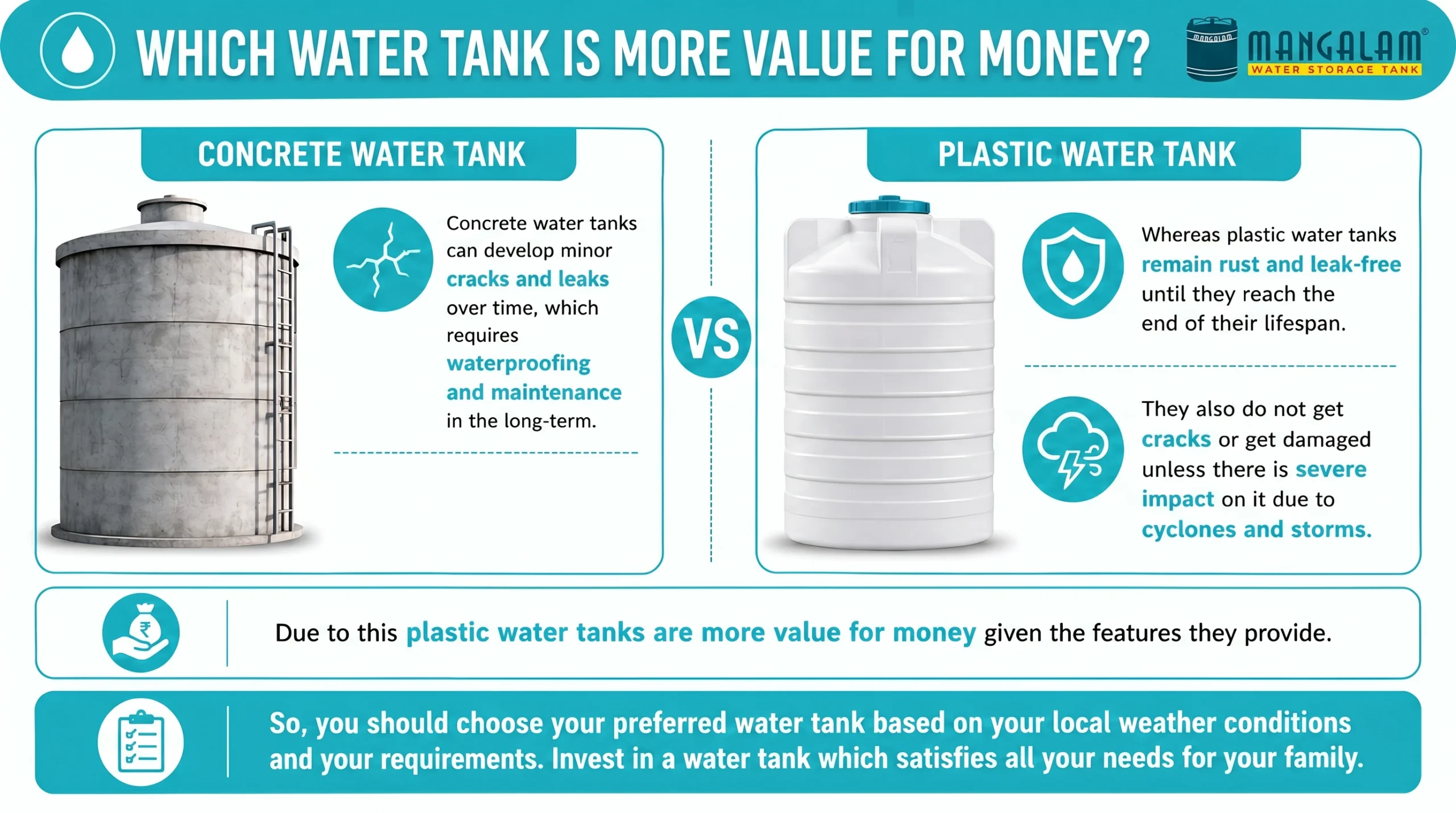
Concrete water tanks can develop minor cracks and leaks over time, which requires waterproofing and maintenance in the long-term.
Whereas plastic water tanks remain rust and leak-free until they reach the end of their lifespan.
They also do not get cracks or get damaged unless there is severe impact on it due to cyclones and storms. Due to this plastic water tanks are more value for money given the features they provide.
So, you should choose your preferred water tank based on your local weather conditions and your requirements. Invest in a water tank which satisfies all your needs for your family which is better Concrete Water Tanks Vs. Plastic Water tanks.
6.Which water tank is easier to install in homes in Odisha?
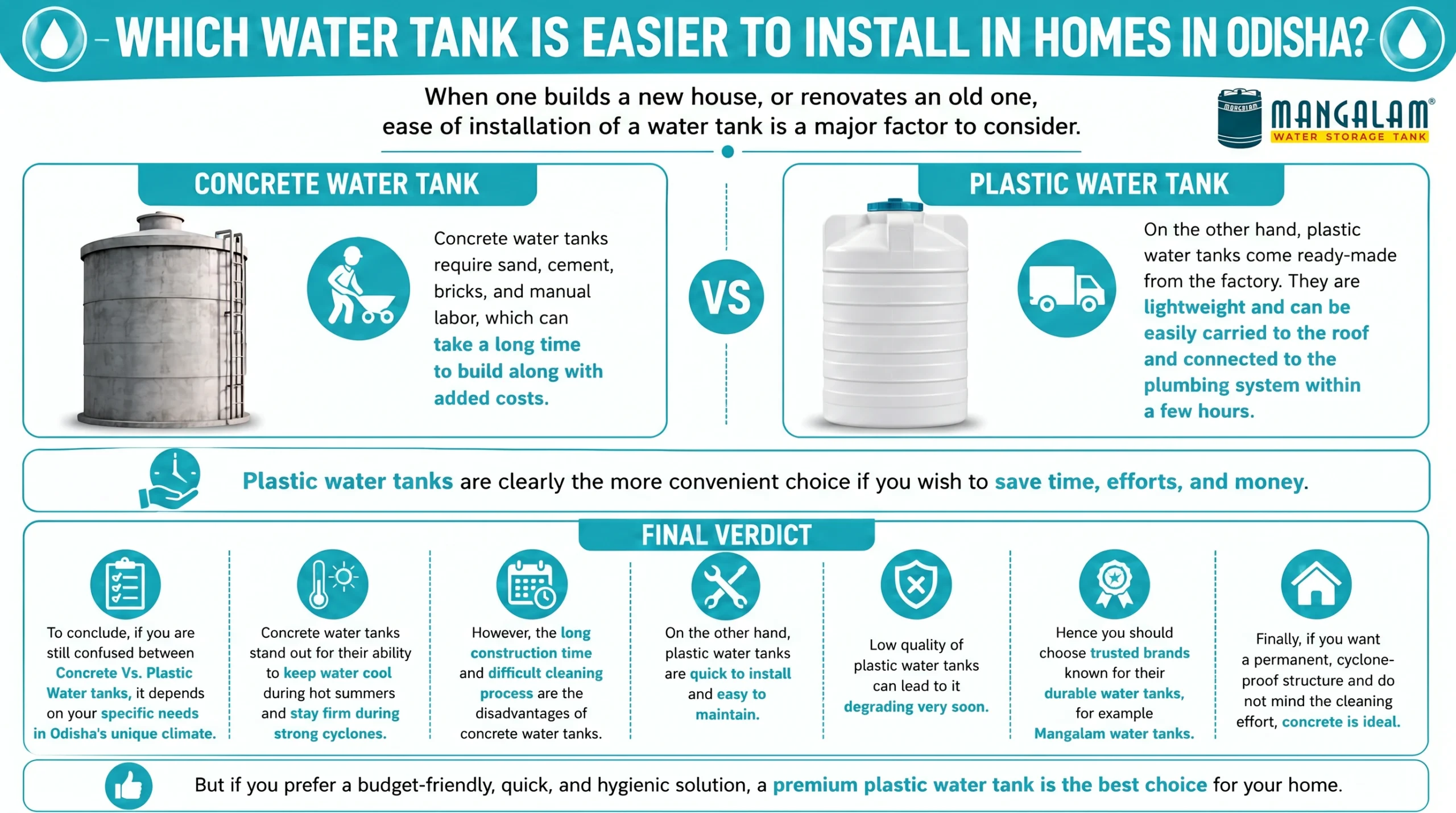
When one builds a new house, or renovates an old one, ease of installation of a water tank is a major factor to consider.
Concrete water tanks require sand, cement, bricks, and manual labor, which can take a long time to build along with added costs.
On the other hand, plastic water tanks come ready-made from the factory. They are lightweight and can be easily carried to the roof and connected to the plumbing system within a few hours.
Plastic water tanks are clearly the more convenient choice if you wish to save time, efforts, and money check it Concrete Water Tanks Vs. Plastic Water tanks.
Final Verdict
To conclude, if you are still confused between Concrete Concrete Water Tanks Vs. Plastic Water tanks, it depends on your specific needs in Odisha’s unique climate.
Concrete water tanks stand out for their ability to keep water cool during hot summers and stay firm during strong cyclones.
However, the long construction time and difficult cleaning process are the disadvantages of concrete water tanks.
On the other hand, plastic water tanks are quick to install and easy to maintain.
Low quality of plastic water tanks can lead to it degrading very soon.
Hence you should choose trusted brands known for their durable water tanks, for example Mangalam water tanks.
Finally, if you want a permanent, cyclone-proof structure and do not mind the cleaning effort, concrete is ideal.
But if you prefer a budget-friendly, quick, and hygienic solution, a premium plastic water tank is the best choice for your home.
At a Glance
| concrete water tanks V/S plastic water tanks | Which One Wins and Why? |
|---|---|
| Summer Water Temperature | Concrete wins because its thick walls naturally keep water cool, while plastic tanks absorb heat quickly. |
| Cyclone and Storm Resistance | Concrete wins because its heavy structure stays firmly fixed during strong winds, while empty plastic tanks can blow away. |
| Cleaning and Algae Prevention | Plastic wins because its smooth inner lining prevents algae growth and makes scrubbing much easier than rough concrete. |
| Lifespan and Durability | Concrete wins because a well-built tank can last for many decades, whereas plastic tanks usually last 10 to 20 years. |
| Value for Money | Plastic wins because they provide a lot of features to keep your water safe and are not easily damaged unless there are cyclones or storms. |
| Ease of Installation | Plastic wins because ready-made tanks can be installed in a few hours, while concrete takes days of construction. |
Frequently Asked Questions (FAQs)
1.How do I choose between concrete vs plastic water tanks for my home in Odisha?
Concrete water tanks offer great heat insulation and storm safety, while plastic water tanks are cheaper, lighter, and much faster to install.
2.Are concrete water tanks better than plastic ones for hot summers?
Yes, because the thick walls of concrete tanks naturally insulate water, keeping it much cooler than standard plastic tanks.
3.What are the main concrete water tanks disadvantages to keep in mind?
They take a long time to build, are expensive to construct, and their rough interior walls easily attract stubborn algae.
4.What is a major plastic water tank advantage for coastal areas?
They are completely rust-proof, leak-free, non-porous, and much easier to scrub and clean compared to rough concrete structures.
5.What are the primary plastic water tank disadvantages during heavy cyclones?
Being very lightweight, empty plastic tanks can get dislodged, severely cracked, or completely blown away by high-speed cyclonic winds.
6.Why is a mangalam water tank highly recommended among plastic options in Odisha?
These premium multi-layer tanks feature specialized UV-protection and anti-bacterial layers that keep water safe, clean, and relatively cool.
7.What are the primary concrete water tank advantages for a long-term investment?
They offer exceptional structural strength, can withstand decades of extreme weather, and never move during heavy cyclonic storms.
8.Which option between concrete vs plastic water tanks has a longer total lifespan?
Concrete tanks can easily last multiple generations, whereas premium options like a mangalam water tank typically last 10 to 20 years.
9.Regarding long-term maintenance, are concrete water tanks better than plastic?
No, because its disadvantages like cracks and moss growth requires regular, expensive waterproofing and heavy scrubbing.
10.Are there any chemical health risks when comparing Concrete Water Tanks Vs. Plastic Water tanks?
Low-quality plastic can leach harmful chemicals into your water during extreme heat, which is one of the major plastic water tank disadvantages.